Indentation Tester for Aerospace In-Service Component Evaluation
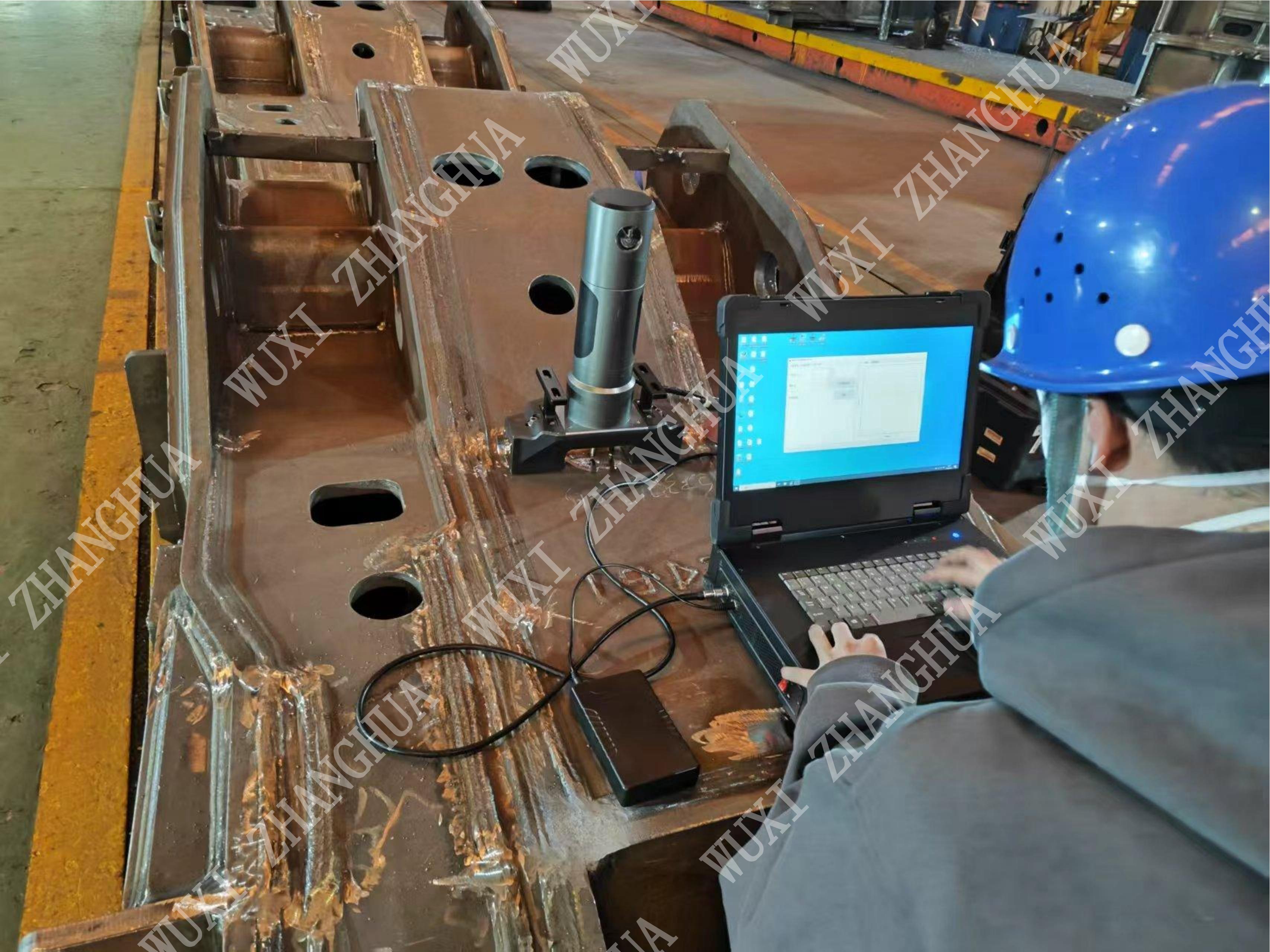
Designed for the aerospace industry, this portable indentation tester (Model PMT-1000) enables nondestructive evaluation of critical components and welds. Its high data acquisition rate and minimal indentation depth ensure reliable assessment without compromising structural integrity, making it suitable for safety-critical applications.
Key Features
-
Aerospace-grade accuracy: 100 Hz data acquisition ensures high-resolution measurement for critical components.
-
Non-destructive: Indentation depth of only 60–120 μm preserves surface integrity.
-
Portable and customizable: Designed for on-site evaluation with a compact control system and multiple power options.
-
Versatile materials: Compatible with cemented carbide, stainless steel, and aluminum alloy components.
Technical Specifications
| Parameter | Value |
|---|
| Maximum Load | 1000 N (Max) |
| Actuation Range | 25 mm |
| Loading Speed | 0.01–30 mm/min |
| Data Acquisition Rate | 100 Hz |
| Rated Voltage of Motor | 2.1 V |
| Rated Current of Motor | 3 A |
| Wired/Wireless Power | 220 V / 24 V |
| Testing Range | Macro-scale |
| Indentation Depth | 60–120 μm |
Models and Options
Model PMT-1000 standard. Options include customized fixtures for aerospace-specific geometries such as turbine blades and wing spars.
Materials and Structure
Constructed with cemented carbide indenter, stainless steel housing, and aluminum alloy frame for durability and portability. The modular design allows easy maintenance.
Applications
- Aerospace component integrity checks
- Weld quality testing in aircraft structures
- Residual stress evaluation
- Maintenance, repair, and overhaul (MRO) operations
Customization
Custom data analysis software, specialized fixtures, and documentation packages are available to meet aerospace standards.
Case Study
No specific aerospace case study provided in input. Please contact us for references.
FAQ
Q: How does this tester handle thin materials?
A: With a maximum load of 1000 N and adjustable speed, it can adapt to thin sections, but the minimum indentation depth is 60 μm, so very thin layers should be evaluated carefully.
Q: Can it measure residual stress?
A: The indentation method can be used to derive residual stress indirectly; please consult our engineers for specific applications.
Q: What power options are available?
A: It operates on 220V wired or 24V wireless power, allowing outdoor and remote use.
Q: Is training provided?
A: Yes, we offer on-site training and technical support.
Q: What is the warranty period?
A: Please contact our sales team for warranty details.
Inquiry Information
For technical specifications, pricing, and customization, reach out to:
Email: vincent_zhang@zhanghuayaoji.com
Phone: +86 181-1890-2332
WhatsApp: +1(805)869-8509
Images: Control system | Operation panel | Indenter component
 ✓ Verified Elite Supplier