Skid-Mounted or Discrete? A Head-to-Head on RCFD Machines for Semiconductor Precursors
Semiconductor precursor production is not one reaction; it is a chain. A precursor such as a high-nickel ternary cathode material, a lithium salt, or an electronic-grade specialty chemical passes through reaction, crystallization, filtration, washing, solvent removal and drying before it is ready for the next stage of the value chain. When each of those steps sits in its own machine, the product has to travel between them. Every transfer is a place where purity, yield and containment can be lost.
RCFD — Reacting-Crystallizing-Filtering-Drying — describes the equipment family that performs these steps inside one controlled sequence. This guide is written for procurement managers and process engineers who have already shortlisted RCFD machines for semiconductor precursors and now have to choose between two structural approaches: an integrated skid-mounted RCFD production system, or a train of discrete unit operations. It compares the two head-to-head on process synergy and footprint, then breaks down the functional attributes of the four core units inside that chain: reactor, crystallizer, agitated Nutsche filter dryer, and conical screw vacuum dryer.
Note on scope: the comparisons below are built from inherent equipment features and first-party product facts supplied by Wuxi Zhanghua Pharm & Chem Equipment Co., Ltd. No third-party competitor specifications or external equipment benchmarks are used in the comparison logic.
Why Precursor Producers Face a Structural Equipment Decision
The real question is not “which machine is better.” It is “how much of the process do I want inside one boundary.” A discrete train typically looks like this: a reactor, a crystallizer, a centrifuge or filter, a washing tank, and a vacuum tray dryer or vacuum oven. Material is discharged, moved, recharged and discharged again at every boundary. An integrated skid-mounted system removes most of those boundaries by combining reaction, crystallization, decolorization, filtration, washing, drying, solvent recovery, temperature control and intelligent control inside one closed unit.
Precursor chemistry makes each open boundary expensive, for three recurring reasons:
- Corrosivity. Precursor and electrolyte streams frequently attack standard stainless steel. Corrosive product drying demands material options that ordinary steel cannot provide.
- Toxicity and irritation. Toxic and stimulating material drying requires a closed path, because an open transfer exposes both the operator and the batch.
- Heat sensitivity. Many precursors degrade if held too long at too high a temperature, so heat-sensitive material drying has to be gentle, uniform and repeatable.
Those three constraints drive the decision. If a process only ever handles one corrosive-free, thermally robust product at small scale, a discrete train can be a rational choice. Once the line has to handle corrosive, toxic or heat-sensitive precursors at production scale — and to keep doing so for years — the balance shifts toward integration. The trade-off is real: integration usually raises the initial capital outlay and concentrates technical dependency on one supplier, while modularity preserves flexibility at the cost of repeated material transfer.
Industry Background: Why the Question Is Getting More Urgent
Demand for high-purity precursor processing has been rising alongside the wider electronics and battery materials markets. According to Intel Market Research, the semiconductor precursor market was valued at approximately USD 1.95 billion in 2025 and is projected to reach USD 3.89 billion by 2034, a CAGR of 10.0%. Dataintelo values the high-nickel ternary cathode materials (NCM) market at USD 18.6 billion in 2025, driven by electric-vehicle battery density requirements.
The equipment side shows the same direction. Cognitive Market Research estimates the global Agitated Nutsche Filter and Dryer (ANFD) market at approximately USD 4.5 billion in 2024, while Fortune Business Insights estimates the ANFD segment at roughly 35% of the total filtration and drying equipment market as of 2024. For a broader reference point, Grand View Research estimated the global filtration and drying equipment market at USD 1.39 billion in 2023 with a projected CAGR of 8.5% through 2030.
Published market-size estimates differ significantly depending on research scope and classification — for example, whether a study measures equipment only or integrated systems. Readers comparing figures should confirm what each report includes before using the numbers side by side.
Two practical consequences follow for buyers. First, high-purity precursor capacity is being built on a scale that rewards closed, automated process chains rather than manual transfers. Second, the material mix keeps widening — high-nickel ternary cathode precursor (NCM), lithium carbonate, lithium salts, photoresist intermediates and electronic chemicals all pass through similar unit operations. As the product portfolio grows, the flexibility of the equipment train matters as much as its peak capacity.
The Detailed Solution: What an Integrated RCFD System Actually Integrates
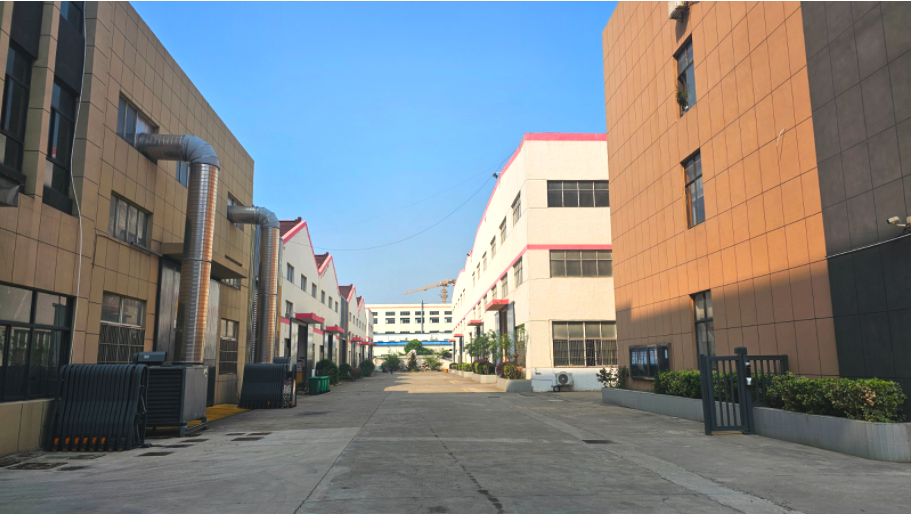
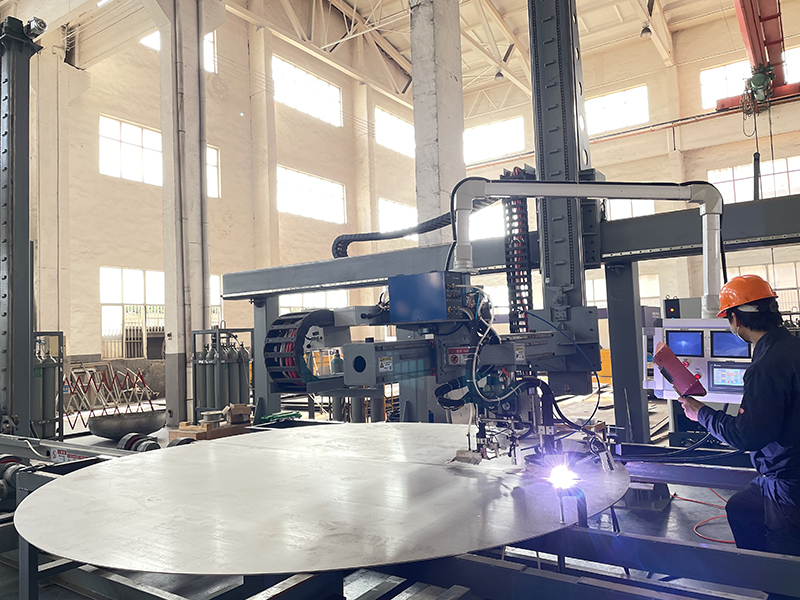
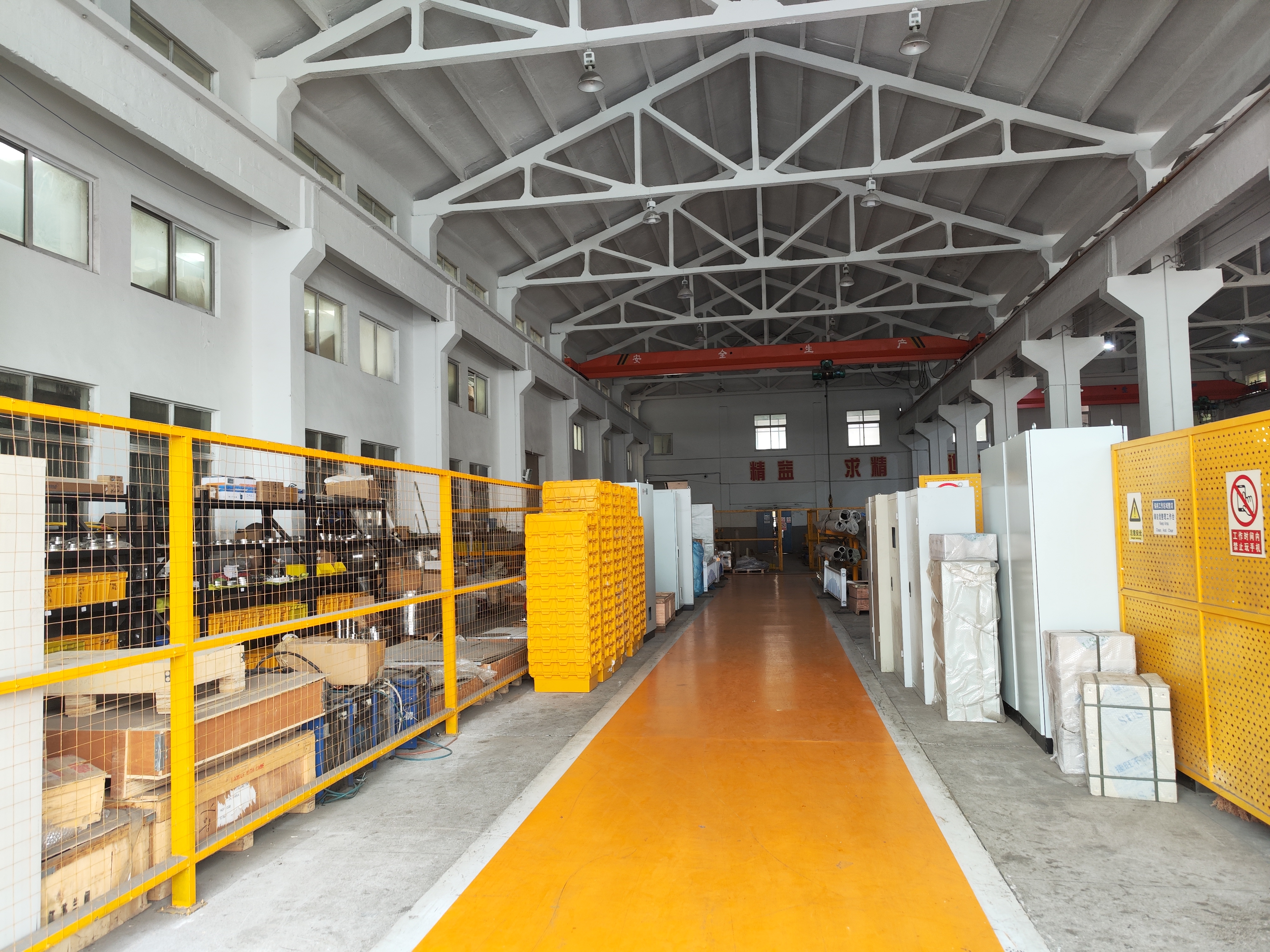
Wuxi Zhanghua Pharm & Chem Equipment Co., Ltd. is a Wuxi-based manufacturer founded in 1976, focused on reaction, crystallization, filtration and drying process equipment. The company has a building area of over 25,000 m², including 11 production workshops of nearly 15,000 m², a 4,000 m² office building and an 8,000 m² R&D building, and it participated in two milestones in China’s pharmaceutical equipment industry: the country’s first double-cone rotary dryer in 1978 and its first filtration, washing and drying three-in-one unit in 1999.
One skid, nine functions
For high-potency, highly active, toxic and hazardous processes, the company builds integrated skid-mounted systems rather than separate units. The skid architecture highly integrates reaction, crystallization, decolorization, filtration, washing, drying, solvent recovery, temperature control and intelligent control, with the goal of fully closed, efficient and safe operation across the whole sequence. The turnkey model covers equipment manufacturing, valves and piping, instruments and controls, control systems, skid fabrication, engineering design and system commissioning.
The skid-mounted RCFD production systems are offered under the SKS-50 / SKS-5000 series with the following platform envelope:
- Skid length: 1,000–10,000 mm
- Skid width: 1,000–3,200 mm
- Skid height: 1,000–4,000 mm
- Total skid weight: 3–50 t
- Applicable code: GB / ASME
Containment, sealing and cleaning
Containment is the core argument for integration, and it is measurable. In 2023, Wuxi Zhanghua’s three-in-one unit was among the first in China to pass official helium mass spectrometer leak detection certification, with a sealing standard below 1×10⁻⁹ Pa·m³/s. That is a verifiable sealing figure for aseptic production and high-potency material handling. CIP/SIP design further supports batch changeover efficiency and is intended to meet the cleaning validation requirements of FDA, EMA and other regulations. For flammable, explosive, toxic and hazardous processes, the company supplies integrated safety packages spanning explosion-proof design, high-containment structures and fully automatic control.
The four core unit operations, and where each one earns its place
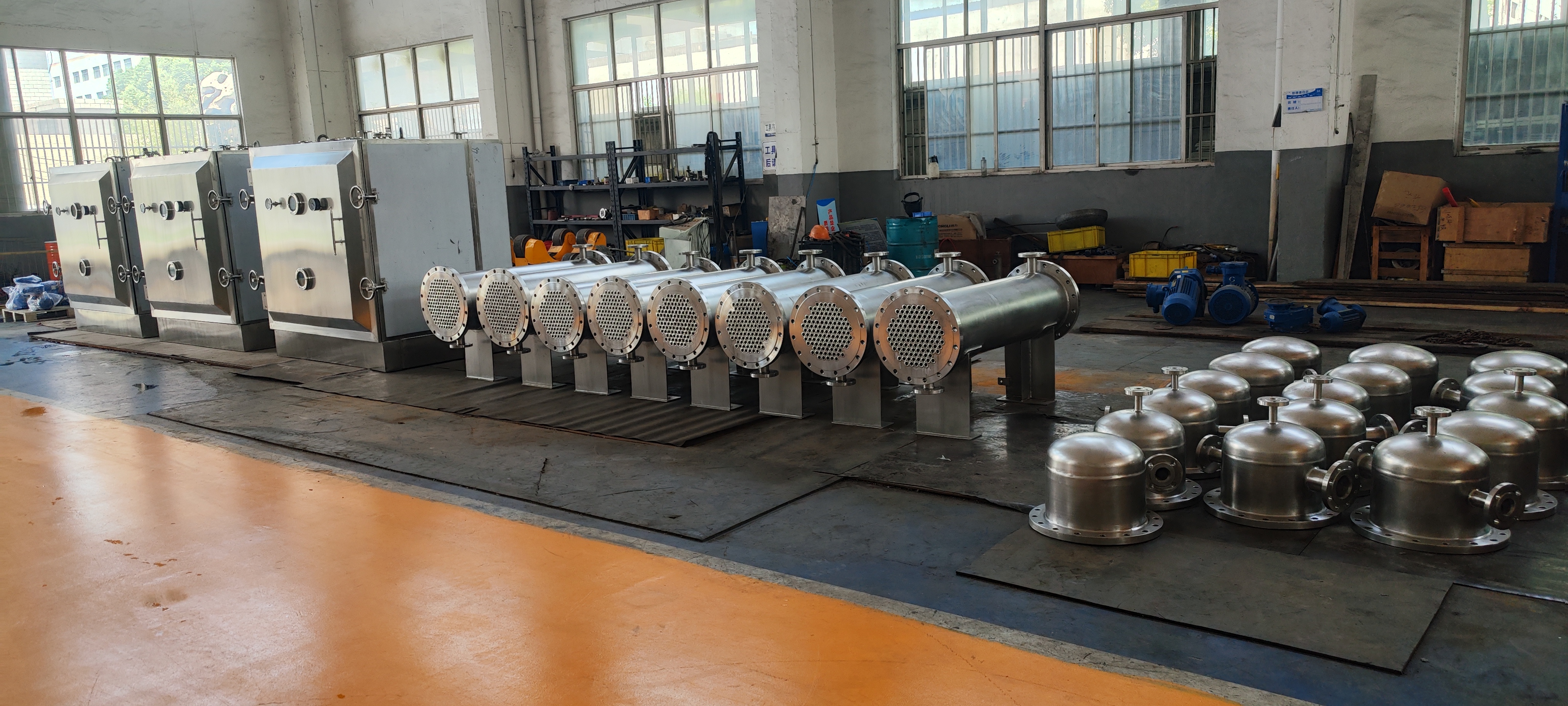
An RCFD machine is not one component; it is a configured assembly. The reactor drives synthesis, the crystallizer controls crystal formation, the agitated Nutsche filter dryer performs solid–liquid separation, washing and drying in a single vessel, and the conical screw vacuum dryer finishes the batch under vacuum for heat-sensitive or residual-solvent material. Wuxi Zhanghua also maintains dedicated product families for the three hard material problems: Corrosive Products Drying, Toxic Stimulating Material Drying and Heat-Sensitive Material Drying, each spanning 150 L to 13,500 L.
Materials, codes and third-party verification
Materials of construction are selectable across SS304, SS316L, Titanium, Hastelloy and PTFE lining. The company began applying special materials such as Hastelloy as early as 2005, and it can custom-design and manufacture equipment over 4 meters in diameter, supporting scale-up from laboratory to ten-thousand-ton scale. The quality management system holds EU CE, PED, MD and LVD certifications, a US ASME U Stamp, and Singapore MOM approval.
On the standards side, Wuxi Zhanghua was a core technical contributor to GB/T 30583-2026 Code for Post-Weld Heat Treatment of Pressure Equipment, with the indentation energy difference method written into Appendix G, and is one of the drafting units of T/CSTM 00824 Determination of Residual Stress in Pressure Equipment — Indentation Energy Difference Method. It also participated in T/CSTM 00826 Code for Induction Heating Post-Weld Heat Treatment of Pressure Equipment. Equipment from the company has been applied by international pharmaceutical and chemical groups including Johnson & Johnson, Pfizer, Novartis, DSM, BASF, Bayer, Solvay and DuPont, and by domestic enterprises such as WuXi AppTec, Xinhua Pharmaceutical, Xinhecheng, United Laboratories, Harbin Pharmaceutical, CSPC, Lukang, Guangzhou Baiyunshan and Lianhe Technology — experience that informs how the equipment is configured for different process conditions.
Step-by-Step Breakdown: How to Run This Comparison for Your Own Plant
The comparison only becomes useful when it is run against a specific material envelope. The following sequence keeps the decision grounded in facts rather than vendor preference.
- Define the material envelope first. List every product the line must handle over the next five years and tag each one as corrosive, toxic/stimulating, heat-sensitive, or none of these. This single step usually resolves the integration question, because a plant handling all three categories cannot rely on open transfer.
- Count the transfer points in the current or planned train. A reactor → crystallizer → centrifuge → washing tank → dryer train typically has three to four solids transfers. Each becomes a containment, yield and cleaning item on the budget.
- Map each process step to a unit operation. Reaction to the reactor; crystallization to the crystallizer; separation and washing to the ANFD; final de-solventization to the conical screw vacuum dryer or vacuum dryer family.
- Decide the integration boundary. Full skid-mounted integration, partial integration (for example, filter-dryer plus reactor on one frame), or a discrete train. This is where footprint and process synergy are traded against capital and flexibility.
- Select materials of construction per stream, not per project. SS304, SS316L, Titanium, Hastelloy and PTFE lining are all available; corrosive streams usually force the decision.
- Validate containment, sealing and safety. Ask for helium leak detection results, NDT documentation, explosion-proof grade (ExdIIBT4 is available as an option), anti-static grounding and explosion-proof electrical design, and pressure relief with interlock protection including safety valve, pressure sensor and emergency vent with automatic shutdown under overpressure.
- Plan the scale-up path before you buy. Confirm that the selected platform can move from lab and pilot scale to production scale without changing the process concept — the SKS-50 / SKS-5000 skid family and the 150 L–13,500 L dryer families are designed to sit on that path.
- Lock in lifecycle support. Confirm spares, documentation, CIP/SIP validation support and commissioning scope, because an integrated system concentrates more of the process into one supplier relationship.
Where the Two Approaches Fit: Use Cases
The choice between skid-mounted integration and a discrete train is not ideological; different precursor and fine-chemical streams favour different answers.
- Corrosive products drying. Streams that attack standard stainless steel benefit from Hastelloy, titanium composite or PTFE-lined internals and a closed loop that limits atmospheric exposure.
- Toxic and stimulating material drying. Here containment is the primary specification, and an integrated closed system is the natural fit.
- Heat-sensitive material drying. Low-temperature vacuum drying under uniform agitation protects thermally fragile intermediates; the discrete alternative is a vacuum tray dryer or vacuum oven, which fits when the material is free-flowing and non-hazardous.
- NCM precursor and lithium-salt processing. High-nickel ternary cathode precursor filtration, lithium carbonate handling and lithium salt solvent removal all involve filtration, washing and drying steps that map directly onto the ANFD and conical screw vacuum dryer families.
- Electronic chemicals and photoresist intermediates. Purity and cross-contamination control dominate, which favours closed architecture and integrated CIP/SIP.
- API and high-potency API wet cake. The same integration logic applies to pharmaceutical wet cake drying and contained drying, where the equipment families overlap with precursor processing.
Comparison Table 1: Integrated Skid-Mounted RCFD vs. Discrete Unit Train
The table below summarizes the functional differences reported for an integrated closed process compared with a traditional multi-equipment combination of “centrifuge + washing tank + dryer.”
| Dimension | Discrete unit train | Integrated skid-mounted RCFD system | Reported effect of integration |
|---|---|---|---|
| Material transfer | Open or semi-open transfer between reactor, crystallizer, centrifuge, washing tank and dryer | Fully closed, continuous sequence inside one skid | Cross-contamination risk reduced to near zero |
| Labor | Manual or semi-automatic intervention at every transfer | Automated integration with reduced manual intervention | Labor cost reduction of 30%–50% |
| Material loss | Losses at discharge, transfer and recharge | Closed loop minimizes product handling | Material loss reduction of approximately 2%–5% |
| Production cycle | Repeated heating, cooling and transfer steps | Reaction, crystallization, filtration, washing and drying run as one sequence | Cycle shortened by 20%–40% |
| Energy | Repeated heating and cooling between units | Avoids repeated heating and cooling | Comprehensive energy consumption reduced by 15%–30% |
| Initial investment | Lower cost per individual machine, but multiple machines, piping and controls | Higher initial investment | Initial investment approximately +20%–40% |
| Cleaning | Unit-by-unit cleaning and validation | Integrated CIP/SIP | Designed to meet cleaning validation requirements of FDA, EMA and other regulations |
| Footprint | Distributed across the plant with multiple foundations and pipe runs | Single skid: 1,000–10,000 mm L × 1,000–3,200 mm W × 1,000–4,000 mm H, 3–50 t | Centralized footprint, easier containment zoning |
| Failure points | More units, more seals, more connection points | Fewer units | Fewer failure points, simpler maintenance planning |
| Scale-up | Train must be rebuilt or extended for each capacity step | SKS-50 / SKS-5000 skid family, lab → pilot → ten-thousand-ton scale | A single continuity path across scales |
Comparison Table 2: The Four Core Unit Operations Head-to-Head
Within an RCFD machine, each unit operation has a distinct job. The following table compares them on function and published platform parameters.
| Unit operation | Role in the precursor line | Model range | Key parameters | Materials of construction |
|---|---|---|---|---|
| Reactor | Reaction and synthesis stage | DFG50–DFG3000 | Internal vessel diameter 400–3,000 mm; jacket diameter 500–3,200 mm; motor power 0.6–37 kW; blending speed 50–100 rpm | SS304, SS316L, Titanium, Hastelloy, PTFE lining |
| Crystallizer | Controlled crystallization and crystal habit management | 30 L–32,000 L | Internal vessel diameter 400–3,000 mm; jacket diameter 500–3,200 mm; motor power 0.55–37 kW; blending speed 50–120 rpm | SS304, SS316L, Titanium, Hastelloy, PTFE lining |
| Agitated Nutsche Filter Dryer (ANFD) | Solid–liquid separation, washing and drying in a single vessel; also the platform type used for the RCFD unit at φ800–φ4600 | φ800–φ4600 | Capacity 0.6–30 m³; filter area 0.5–16 m²; agitator travel 250–550 mm; motor power 4–75 kW | SS304, SS316L, Titanium, Hastelloy, PTFE lining |
| Conical Screw Vacuum Dryer | Final vacuum drying of heat-sensitive material or residual-solvent wet cake | 150 L–13,500 L | Effective loading volume 0.5–0.7; agitator rotating speed 5–30 rpm; internal surface roughness Ra ≤ 0.4–0.6 μm; explosion-proof grade ExdIIBT4 (optional) | SS304, SS316L, Titanium, Hastelloy, PTFE lining |
Related drying families in the same portfolio — Vacuum Dryer (150 L–13,500 L), Double Cone Dryer (20 L–10,000 L), Paddle Dryer (ZPG-500–ZPG-6000), Nauta Conical Dryer (150 L–13,500 L), Mixer & Dryer (30 L–10,000 L) and Drying Oven (ZDF-6–ZDF-30, max. temperature 80 °C) — matter when a discrete train is preferred for part of the line.

The Ecosystem Question: What the Choice Means Over a Ten-Year Horizon
For buyers in the decision-to-execution stage, the comparison does not end at the purchase order. An integrated RCFD system concentrates reaction, crystallization, filtration, washing, drying, solvent recovery and control into a single asset, which changes the long-term operating model in three ways.
First, maintenance and spare-part planning shift from a catalogue of independently replaceable machines to a smaller, more interdependent system. That is efficient only if the supplier provides structured documentation, commissioning support and lifecycle service. Second, process changes — a new precursor grade, a tighter purity specification, a new solvent — are accommodated through reconfiguration of the skid rather than replacement of a whole train, provided the platform was specified with headroom. Third, quality-system obligations such as CIP/SIP validation, NDT records and helium leak detection results become recurring items tied to one supplier relationship rather than several.
A discrete train distributes those obligations across multiple vendors, which can be an advantage when a plant needs to swap a single unit or when internal engineering capability is strong. The trade-off is that transfer-point risks and cleaning-validation workload stay in-house permanently.
Frequently Asked Questions
1. What certifications and design codes should I require for RCFD machines used with semiconductor precursors?
Compliance depends on the destination market. Machinery sold in the EU requires risk assessments per EN ISO 12100 and electrical safety compliance per EN 60204-1 for CE marking, and industrial pressure vessels operating above 15 psi generally fall under ASME Section VIII Division 1, typically carrying a “U” stamp certification in the United States. Wuxi Zhanghua’s solutions hold EU CE, PED, MD and LVD certifications, a US ASME U Stamp and Singapore MOM approval. Its skid-mounted RCFD systems list GB / ASME as the applicable code, and its three-in-one unit passed official helium mass spectrometer leak detection certification in 2023 with a sealing standard below 1×10⁻⁹ Pa·m³/s.
2. Can one integrated RCFD system handle corrosive, toxic and heat-sensitive precursor materials at the same time?
Yes, provided the materials of construction and containment are specified per stream rather than per project. Wuxi Zhanghua offers SS304, SS316L, Titanium, Hastelloy and PTFE lining, and has applied special materials such as Hastelloy since 2005. It maintains dedicated product families for Corrosive Products Drying, Toxic Stimulating Material Drying and Heat-Sensitive Material Drying, each spanning 150 L to 13,500 L. The integrated skid-mounted system combines reaction, crystallization, decolorization, filtration, washing, drying, solvent recovery, temperature control and intelligent control inside one closed unit, which is what makes simultaneous handling of hazardous and thermally fragile material feasible.
3. What actually drives the cost difference between an integrated skid-mounted system and a discrete unit train?
The integrated approach normally carries a higher initial capital outlay — reported at approximately +20%–40% versus a traditional combination of “centrifuge + washing tank + dryer” — but the comparison should be run on total cost of ownership, not purchase price. Reported operating effects of integration include a 30%–50% reduction in labor cost, a 2%–5% reduction in material loss, a 20%–40% shorter production cycle, and a 15%–30% reduction in comprehensive energy consumption, together with cross-contamination risk reduced to near zero. For a high-value precursor, the yield and containment savings typically dominate the capital difference; for low-value, low-hazard products, they may not.
4. Can we validate the process on our own precursor material before committing to a full production system?
Yes. Wuxi Zhanghua provides process adaptability analysis and selection calculations, special material solutions including titanium composite and Hastelloy, case visits for similar materials, quality verification documents such as helium leak detection and NDT records, and prototype testing with lab and pilot scale-up support. Purchase terms list a minimum order quantity of 1 unit, FOB delivery and pre-shipment test acceptance. Buyers are encouraged to request technical proposals, calculation sheets, test reports and case lists from each candidate supplier for objective horizontal comparison.
5. What does delivery and long-term support look like once we move into execution?
Standard terms list FOB delivery, a 40/60 payment structure and pre-shipment test acceptance. Because an integrated skid-mounted system concentrates more of the process into a single asset, the turnkey scope matters: it covers equipment manufacturing, valves and piping, instruments and controls, control systems, skid fabrication, engineering design and system commissioning, and the platform supports scale-up from laboratory through pilot to ten-thousand-ton scale. Confirmed lead times depend on configuration, materials of construction and code requirements, so they should be fixed during quotation. As a next step, you can request a configured proposal and download the full product brochure here: Wuxi Zhanghua RCFD and drying equipment brochure (PDF).
Conclusion: Choose the Boundary, Then Choose the Machine
RCFD machines for semiconductor precursors solve a specific problem: they keep corrosive, toxic and heat-sensitive material inside one closed sequence instead of pushing it across a plant. The head-to-head comparison comes down to where you draw that boundary. An integrated skid-mounted RCFD production system concentrates reaction, crystallization, filtration, washing, drying and solvent recovery into one footprint of 1,000–10,000 mm × 1,000–3,200 mm × 1,000–4,000 mm, with sealed operation below 1×10⁻⁹ Pa·m³/s, integrated CIP/SIP, and reported reductions of 30%–50% in labor cost, 2%–5% in material loss and 15%–30% in energy consumption — at a reported initial capital premium of 20%–40%. A discrete train keeps flexibility and lower entry cost, and accepts the transfer points as an ongoing operating burden.
The four core units inside either structure perform different jobs: the reactor handles synthesis, the crystallizer controls crystal formation, the agitated Nutsche filter dryer combines separation, washing and drying in one vessel at φ800–φ4600, and the conical screw vacuum dryer finishes heat-sensitive material from 150 L to 13,500 L. Choosing the correct boundary first — and then configuring units against the material envelope — is what makes the procurement decision defensible over the ten-year life of the asset.
Next Step
If you are evaluating integrated skid-mounted RCFD systems or discrete unit trains for semiconductor precursors, Wuxi Zhanghua Pharm & Chem Equipment Co., Ltd. can provide a process adaptability analysis, a selection calculation, material options including titanium composite and Hastelloy, and case visits for similar materials.
Download the brochure: RCFD and drying equipment brochure (PDF)
Contact: Vincent Zhang
Email: vincent_zhang@zhanghuayaoji.com
Tel: +86 181-1890-2332
WhatsApp: +1 (805) 869-8509
Address: No. 8 Zhenshi Road, Shitangwan Industrial Park, Wuxi, Jiangsu Province, China
Website: www.zhanghua1976.com
Have Questions or Need More Details?
Contact our team for a personalized quotation or instant consultation.
Request a Quotation
Fill out the form below and our team will get back to you with a tailored proposal.
WhatsApp Direct Chat
Prefer to chat in real-time? Message us on WhatsApp for instant assistance & quick answers.
- Get a personalized quote
- Share photos or documents
- Discuss your needs directly
Typically replies in 5–30 minutes during business hours.