Top 5 Drying Solutions for Semiconductor Precursors: A Buyer's Recommendation List
Short answer: five drying solution types cover most documented duty requirements in semiconductor precursor manufacturing — the Agitated Nutsche Filter Dryer (ANFD), the Conical Screw Vacuum Dryer, the Paddle Dryer, the Double Cone Dryer, and the Vacuum Tray Dryer / Vacuum Oven. This is a ranked shortlist of solution types, not a ranking of suppliers. Each entry is assessed against six buyer-facing criteria: containment, thermal control, agitation regime, discharge and cleanability, material of construction, and compliance documentation.
All five configurations appear in the published product range of Wuxi Zhanghua Pharm & Chem Equipment Co., Ltd., a Chinese manufacturer of reaction, crystallization, filtration and drying process equipment, founded in 1976 in Wuxi, Jiangsu Province, and supplying pharmaceutical, fine chemical, new energy and electronic chemical producers. The company website is www.zhanghua1976.com.
Why Precursor Drying Is a Constraint Problem, Not Just an Equipment Choice
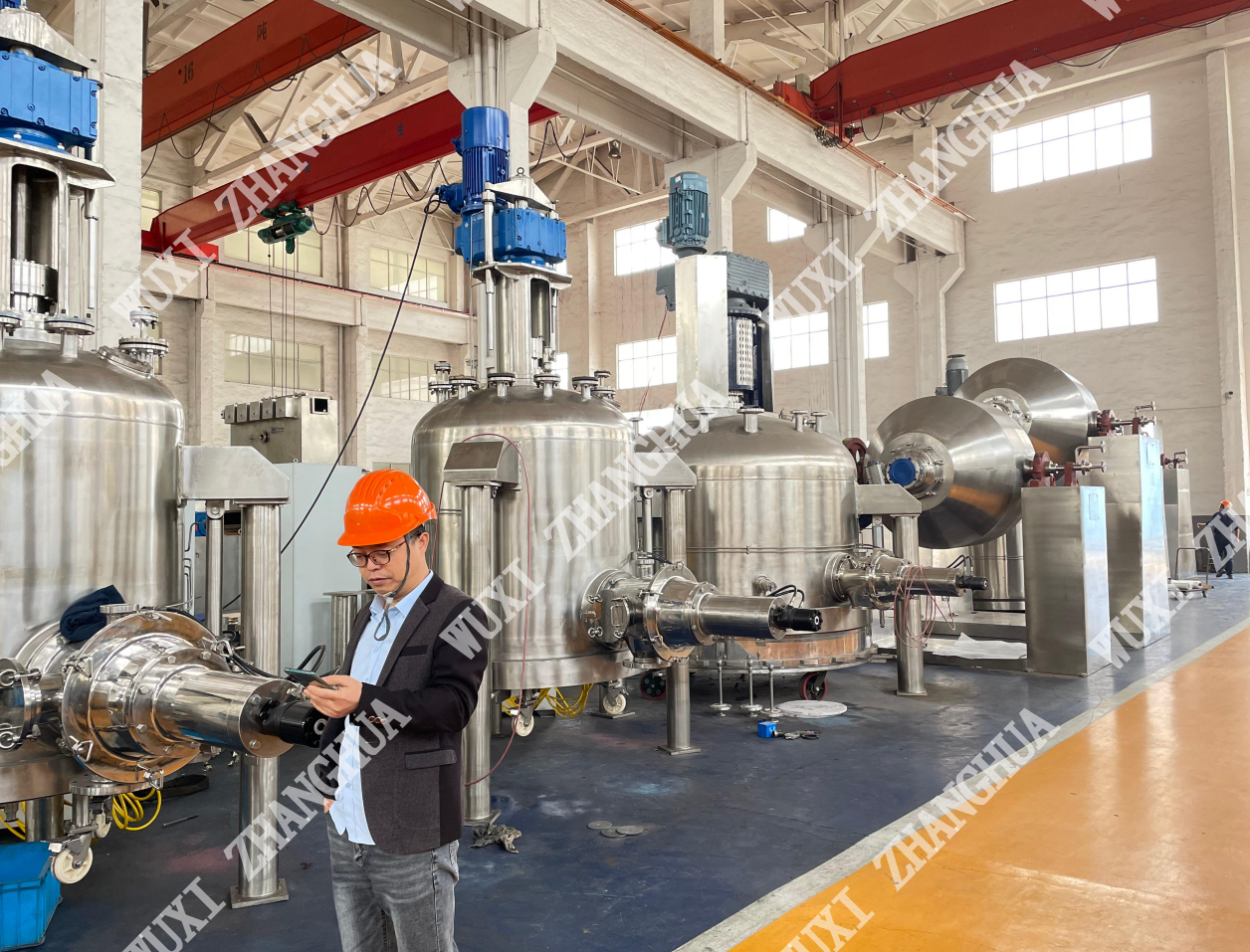
Drying a semiconductor precursor is rarely a single-variable decision. The wet cake leaving a filter or centrifuge usually carries several constraints at the same time, and one dryer has to satisfy all of them in the same batch:
- Purity protection. A closed structure and single-vessel processing reduce the risk of contamination during material transfer; the same principle applies to avoiding shared equipment between products.
- Thermal sensitivity. Vacuum drying removes moisture and solvent at low temperature, which protects precursors whose crystal form or structure degrades under heat.
- Corrosion. Halide-containing and acidic intermediates attack standard stainless steel. Wuxi Zhanghua has applied special materials such as Hastelloy since 2005, alongside titanium, titanium composite and PTFE lining options.
- Toxicity and containment. Toxic or irritating materials must be dried in a sealed system. In 2023, the company's filtration, washing and drying three-in-one unit was among the first in China to pass official helium mass spectrometer leak detection certification, with a sealing standard below 1×10⁻⁵ Pa·m³/s.
- Solvent recovery and explosion protection. Explosion-proof grade ExdIIBT4 is available as an option across the vacuum dryer range, and skid-mounted systems can integrate solvent recovery.
- Surface finish and cleanability. Agitated vacuum dryer and filter dryer surfaces are specified at Ra ≤ 0.4–0.6 μm; the Double Cone Dryer is specified at Ra ≤ 0.6 μm.
- Documentation. Pressure equipment normally has to meet either GB or ASME codes depending on the destination market, and European installations add PED and ATEX requirements.
Industry Background: What the Available Market Data Shows
Third-party research gives a directional view of the market this equipment serves:
- The global semiconductor precursor market was valued at approximately USD 1.95 billion in 2025 and is projected to reach USD 3.89 billion by 2034, a CAGR of 10.0% (Intel Market Research).
- The global Agitated Nutsche Filter and Dryer (ANFD) market was valued at approximately USD 4.5 billion in 2024 (Cognitive Market Research).
- The ANFD segment accounts for approximately 35% of the total filtration and drying equipment market as of 2024 (Fortune Business Insights).
- The wider filtration and drying equipment market was estimated at USD 1.39 billion in 2023, with a projected CAGR of 8.5% through 2030 (Grand View Research).
- High-nickel ternary cathode material (NCM), a major driver of precursor filtration and drying capacity, was valued at USD 18.6 billion in 2025 (Dataintelo).
These figures should be read as directional rather than additive. Scope definitions differ between research houses: Grand View Research's USD 1.39 billion for filtration and drying equipment in 2023 and Cognitive Market Research's USD 4.5 billion for the ANFD sub-segment in 2024 cannot describe the same boundary. The gap reflects different classification (machinery versus integrated systems) rather than disagreement about growth. Buyers using these numbers for capacity planning should confirm the definition behind each one.
In an adjacent solvent-removal technology, Buss-SMS-Canzler GmbH is recorded as a key player in the agitated thin film dryer (ATFD) market with a 16.2% share in 2025 (Dataintelo). Agitated thin film evaporation is a different unit operation from filter drying and is usually applied where continuous solvent removal is required; it is useful context when a supplier proposes a multi-step flowsheet, but it does not replace a filter dryer in a filtration-plus-drying duty.
How the Five Solutions Were Ranked
- Containment and closed transfer. How completely the machine isolates product from the operating environment and from the operator.
- Thermal control. Whether the configuration supports vacuum and low-temperature drying within a defined temperature window.
- Agitation regime and shear. Whether the product is tumbled, stirred or left static, and what that means for crystal integrity.
- Discharge completeness and cleanability. Documented surface roughness, residue behaviour and changeover practicality.
- Material of construction. Availability of SS304, SS316L, titanium, Hastelloy and PTFE lining for corrosive or high-purity duty.
- Compliance documentation. Whether PED, ATEX, ASME U Stamp, CE or MOM documentation exists and, critically, what vessel size each certificate actually covers.
The ranking reflects breadth of fit across these six criteria for precursor duty. It is not a claim that a lower-ranked solution is inferior in every application — a static tray dryer can be precisely the right answer for a shear-sensitive, small-batch product, while ranking fifth on this list.
The Top 5 Drying Solutions for Semiconductor Precursors
1. Agitated Nutsche Filter Dryer (ANFD / Filter Dryer)
The ANFD ranks first because it is the only configuration in this shortlist that performs filtration, washing and drying inside a single closed vessel, which removes the transfer steps where contamination and product loss normally occur.
Documented configuration range (Agitated Nutsche Filter Dryer / Filter Dryer, model φ800–φ4600):
- Capacity: 0.6–30 m³
- Filter area: 0.5–16 m²
- Travel route of the mixing blade: 250–550 mm
- Motor power: 4–75 kW
- Materials: SS304, SS316L, titanium, Hastelloy, PTFE lining
- Stirring speed supports variable-frequency adjustment
Where it fits: crystalline slurries, high-viscosity and high-purity materials, pharmaceutical intermediates, and new energy materials such as lithium battery materials. For precursor duty the one-vessel sequence matters most when the wet cake must be washed to remove residual salts before drying.
Compliance already documented for this family: PED 2014/68/EU certificate CE-0062-PED-G-ZPE 001-26-CHN issued by BV for a DN850 filter, valid from 2026-01-05 to 2031-01-04; EU Type Examination certificate 556/5/2018 for a DN500 filtering, washing and drying machine, valid to 2028-05-31; and ATEX certificate BVI 22 ATEX 0072 X for a DN2300 agitated nutsche filter with marking II 2/3 G Ex h IIB T3 Gb/Gc, valid to 2032-11-21.
What to verify before ordering: each certificate names a specific vessel size. A purchase order for a different diameter requires confirmation of which certificate covers that size, and whether an additional assessment is needed. The smallest documented capacity in this range is 0.6 m³, so buyers working at laboratory scale should confirm pilot-scale options during the sample trial.
2. Conical Screw Vacuum Dryer
The Conical Screw Vacuum Dryer ranks second because it dries heat-sensitive crystalline material under vacuum with a slow, low-shear agitator and discharges almost completely — a combination that suits high-value precursors where residual heel is costly.
Documented configuration range (model 150 L–13,500 L): effective loading volume 0.5–0.7; agitator rotating speed 5–30 rpm; internal surface roughness Ra ≤ 0.4–0.6 μm; explosion-proof grade ExdIIBT4 optional; materials SS304, SS316L, titanium, Hastelloy, PTFE lining.
Published product characteristics for this family include integrated desolvation and dehydration, customizable agitator speed for different processes, corrosion and pressure resistance, and fast discharge without residue, with suitability for both paste and powder forms. The published description of the conical vacuum dryer family also states an efficiency level 3–5 times that of ordinary double-cone dryers. That is a first-party product claim, restated here as such rather than as an independently verified figure.
Where it fits: vacuum-dried crystalline powders and pastes at batch sizes from 150 L to 13,500 L, where low-shear agitation is preferred and the material arrives as a wet cake from an upstream filter or centrifuge.
Limit to plan around: this is a dryer, not a filter. If the process needs controlled solvent washing of the cake, washing must happen upstream, or the project should move to an ANFD or a skid-mounted integrated system. Conical geometry also interacts with bulk density and angle of repose, so a material-specific trial is the practical way to confirm discharge behaviour.

3. Paddle Dryer
The Paddle Dryer ranks third for buyers who need conduction drying at a larger working volume, with adjustable residence time and moisture control.
Documented configuration range (model ZPG-500–ZPG-6000): working volume 300–3,600 L; heating area 3.2–16.5 m²; mixing speed 8–18 rpm; motor power 4–22 kW; materials SS304, SS316L, titanium, Hastelloy, PTFE lining.
Published characteristics include a large heat exchange area, high thermal efficiency, corrosion-resistant and hygienic design, dust-free closed operation, recoverable waste heat, and energy-saving continuous drying.
Where it fits: paste-like or sludge-like intermediates in the 300–3,600 L range, and processes moving toward continuous rather than strictly batch operation. Adjustable residence time and moisture control are the two parameters worth specifying in the enquiry, because they determine how tightly outlet moisture can be held.
Limit to plan around: paddle agitation applies more mechanical work to the product than tumbling. Where the precursor is a fragile crystal, attrition should be checked in a trial before the configuration is fixed.
4. Double Cone Dryer
The Double Cone Dryer ranks fourth: it is the simplest and most mechanically gentle option here, with no internal agitator and a sealed tumbling vessel that integrates mixing, drying and cooling.
Documented configuration range (model 20 L–10,000 L): charging coefficient 0.4–0.6; surface roughness Ra ≤ 0.6 μm; rotating speed 4–10 r/min; motor power 1.5–15 kW; explosion-proof grade ExdIIBT4 optional; materials SS304, SS316L, titanium, Hastelloy, PTFE lining.
Published characteristics include a vacuum-sealed structure for uniform drying without cross-contamination, intelligent temperature control, low-temperature vacuum drying of heat-sensitive materials, and suitability for granules, powders and crystals. The design also has a documented place in the manufacturer's history: Wuxi Zhanghua built China's first double-cone rotary dryer in 1978, and China's first filtration, washing and drying three-in-one unit in 1999. That is a lineage fact rather than a performance claim, but it explains why the two families are often specified together.
Where it fits: small-to-mid batches of crystalline powder where low shear matters more than drying speed, and where the plant wants a robust, easily maintained unit.
Limits to plan around: there is no impeller, so heat is transferred mainly through the jacketed shell, and drying takes longer than in agitated designs when the material flows poorly. With no filtration function, upstream filtration and washing must be handled elsewhere.

5. Vacuum Tray Dryer / Vacuum Oven
The Vacuum Tray Dryer ranks fifth because it is deliberately static: zero agitation, no moving parts in the product zone, and single-product tooling that removes shared-equipment risk.
Documented configuration range (Drying Oven, model ZDF-6–ZDF-30): number of drying trays 16–60; evaporation area 5–18 m²; steam pressure 0.2–0.6 MPa; maximum temperature 80 °C; materials SS304, SS316L, titanium, Hastelloy.
Where it fits: shear-sensitive or shear-zero products, small-batch high-value intermediates, and cases where the plant prefers product-dedicated equipment over a shared vessel. Low-temperature vacuum operation protects heat-sensitive material, and the absence of an agitator makes the unit straightforward to validate.
Limits to plan around: static batch drying has lower heat-transfer efficiency than agitated designs, and cycle times lengthen if the wet cake cakes or agglomerates. Model-level parameters vary within the ZDF range, so tray count, temperature and vacuum capability should be confirmed against the specific model rather than assumed from the range.

Side-by-Side Comparison of the Five Solutions
| Rank and solution | Documented configuration range | Best-fit precursor duty | Key limitation to verify | Documented material options |
|---|---|---|---|---|
| 1. Agitated Nutsche Filter Dryer | Capacity 0.6–30 m³; filter area 0.5–16 m²; blade travel 250–550 mm; 4–75 kW | Filtration, washing and drying in one vessel; crystalline slurry; high-purity, high-viscosity intermediates | Certificate scope is size-specific (DN500 / DN850 / DN2300); smallest documented capacity 0.6 m³ | SS304, SS316L, titanium, Hastelloy, PTFE lining |
| 2. Conical Screw Vacuum Dryer | 150–13,500 L; loading volume 0.5–0.7; agitator 5–30 rpm; Ra ≤ 0.4–0.6 μm | Low-shear vacuum drying of heat-sensitive crystalline powder and paste | No filtration or washing function; discharge behaviour is material-dependent | SS304, SS316L, titanium, Hastelloy, PTFE lining |
| 3. Paddle Dryer | ZPG-500–ZPG-6000; working volume 300–3,600 L; heating area 3.2–16.5 m²; 8–18 rpm; 4–22 kW | Higher-volume paste or sludge-like intermediates with residence-time and moisture control | Agitation is more mechanical than tumbling — check crystal attrition | SS304, SS316L, titanium, Hastelloy, PTFE lining |
| 4. Double Cone Dryer | 20–10,000 L; charging coefficient 0.4–0.6; 4–10 r/min; 1.5–15 kW; Ra ≤ 0.6 μm | Gentle, low-shear drying of granules, powders and crystals | No agitator; slower where material flows poorly; no filtration function | SS304, SS316L, titanium, Hastelloy, PTFE lining |
| 5. Vacuum Tray Dryer / Vacuum Oven | ZDF-6–ZDF-30; 16–60 trays; evaporation area 5–18 m²; steam 0.2–0.6 MPa; max 80 °C | Zero-shear, small-batch, product-dedicated drying | Lower heat-transfer efficiency than agitated designs; caking risk without agitation | SS304, SS316L, titanium, Hastelloy |
Explosion-proof grade ExdIIBT4 is available as an option on the agitated vacuum dryer, conical dryer and mixer-dryer families, and the applicable pressure code across these ranges is GB or ASME.
Integrating the Dryer into a Closed Production Line
Buyers evaluating individual dryers often find that drying is only the last of four steps. For toxic, irritating or highly corrosive precursors, Wuxi Zhanghua supplies skid-mounted Reacting-Crystallizing-Filtering-Drying production systems (model SKS-50 / SKS-5000) that integrate reaction, crystallization, decolorization, filtration, washing, drying, solvent recovery, temperature control and intelligent control in one fully closed, automated skid.
Documented skid parameters: skid length 1,000–10,000 mm; skid width 1,000–3,200 mm; skid height 1,000–4,000 mm; total skid weight 3–50 t; applicable code GB or ASME; materials SS304, SS316L, titanium, Hastelloy, PTFE lining.
For precursor projects the practical question is whether the dryer should be a discrete unit or part of an integrated skid. A discrete dryer suits plants that already have filtration and washing capacity and want to add or upgrade drying. A skid-mounted system suits new lines where containment, reduced manual intervention and fewer process connections are the priorities — the published advantages include reduced process connection, lower material loss, a compact footprint, and quicker start-up and shutdown for batch production.
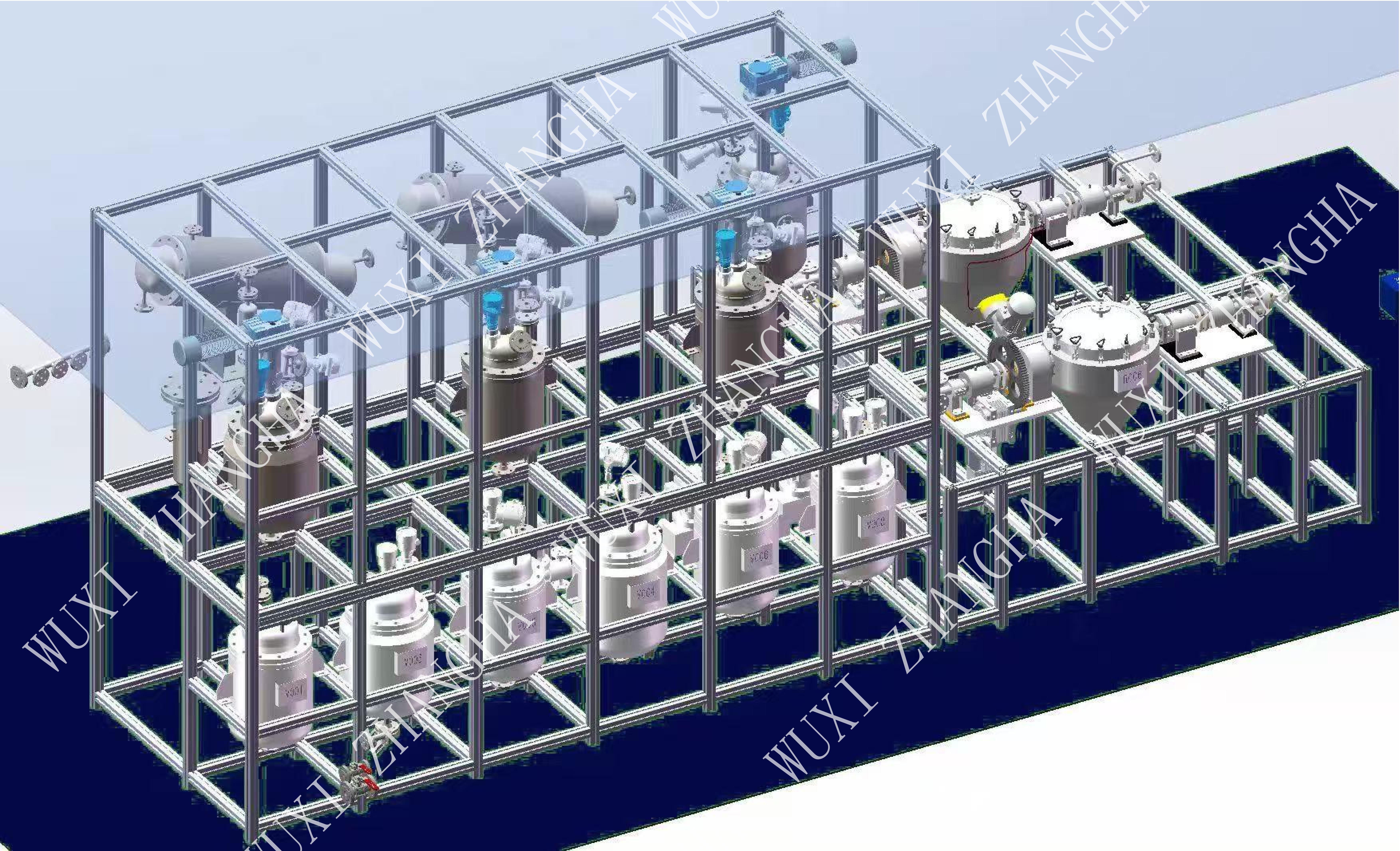
The company also provides turnkey scope covering equipment manufacturing, valves and piping, instruments and controls, control systems, skid fabrication, engineering design and system commissioning.
Step-by-Step: How to Evaluate and Validate a Drying Solution
- Define the duty before the equipment. List the solvent system, residual moisture target, toxicity classification, corrosion behaviour, and whether the wet cake requires washing inside the vessel.
- Shortlist by function. If filtration and washing must happen inside the dryer, the ANFD is the only option on this list that qualifies. If not, agitation regime and batch size drive the choice.
- Fix size and materials. Map the batch volume onto the documented ranges, then confirm the material of construction — SS316L as the default, with titanium, Hastelloy and PTFE lining available for corrosive media.
- Match compliance to the destination market. EU installations require PED and, for solvent-bearing duty, ATEX; US installations typically require ASME U Stamp pressure vessels; documented Singapore projects have required MOM compliance.
- Check certificate scope against vessel size. Certificates name diameters — DN500, DN850 and DN2300 appear in the documents cited above — so confirm that the exact size ordered is covered.
- Request a process adaptability analysis and selection calculation. Both are offered as pre-sales support and both should be delivered in writing.
- Run a sample or prototype trial. Prototype testing and laboratory/pilot scale-up support are offered; this is where discharge behaviour, caking and the drying curve are confirmed rather than assumed.
- Request quality verification documents. Helium leak detection reports and non-destructive testing records are the documents to ask for when containment is critical.
- Compare commercially on like-for-like scope. Documented commercial parameters: minimum order quantity 1 unit; lead time 30–120 days; monthly capacity 100 units; customization of voltage, logo, material, design pressure, working temperature, configuration and size; after-sales support through remote support, spare parts supply, installation guidance and maintenance training; 100% testing before shipment.
A practice that protects the buyer: ask every shortlisted supplier for technical proposals, calculation sheets, test reports and case lists, and compare them horizontally. Where a supplier cannot produce a calculation sheet for the duty in question, the quotation is a price rather than a solution.
Use Cases: Which Solution Fits Which Precursor Duty
| Duty profile | Recommended primary solution | Reason |
|---|---|---|
| Crystalline slurry requiring filtration, washing and drying in one closed vessel | Agitated Nutsche Filter Dryer | The only listed configuration that performs all three operations in one vessel; documented for crystalline and slurried material |
| Heat-sensitive crystalline powder, low shear, batch 150–13,500 L | Conical Screw Vacuum Dryer | Low-speed agitator of 5–30 rpm with vacuum operation and near-complete discharge |
| Larger-volume paste or sludge intermediate, 300–3,600 L | Paddle Dryer | Large heat exchange area with adjustable residence time and moisture control |
| Friable crystals in small-to-mid batches requiring minimal mechanical action | Double Cone Dryer | Tumbling action at 4–10 r/min with no internal impeller |
| Shear-zero, small batches with product-dedicated tooling | Vacuum Tray Dryer / Vacuum Oven | Static drying across 16–60 trays with no moving parts in the product zone |
| Toxic, irritating or highly corrosive precursor line needing end-to-end containment | Skid-mounted Reacting-Crystallizing-Filtering-Drying production system | Integrates reaction through drying in a closed automated skid with solvent recovery |
Documented reference projects give some indication of how these configurations behave in practice. In a Maltese pharmaceutical plant producing API raw materials under corrosive, continuous conditions, filtration equipment matched with a vacuum system supports GMP-compliant manufacturing with automated control. In Singapore, an Agitated Nutsche Filter Dryer operating in batch mode within a pharmaceutical engineering project was supplied against Singapore MOM certification with a matched vacuum system; in a separate Singapore pharmaceutical plant, ten units have operated for eight years with stable performance in storing, filtering, washing and drying of semi-finished drugs.
These references are pharmaceutical and fine-chemical installations, and they are cited here as evidence of containment, automation and GMP documentation practice. The documentation available for this article does not include a named semiconductor precursor reference project, so buyers should request precursor-specific references, or run a sample trial on their own material, before finalising a purchase order.
Compliance and Documentation Constraints Buyers Should Verify
| Certification | Certificate number | Authority | Documented scope | Validity |
|---|---|---|---|---|
| PED 2014/68/EU | CE-0062-PED-G-ZPE 001-26-CHN | BV | DN850 Filter (pressure equipment) | 2026-01-05 to 2031-01-04 |
| PED CE (EU Type Examination) | 556/5/2018 | TI | DN500 filtering, washing and drying machine | 2018-06-01 to 2028-05-31 |
| CE (Machinery Directive 2006/42/EC) | IPC/ER/MD-24/108 | BV | 25 L rotary single cone vacuum dryer, model ZH-MD-25 | 2025-03-12 to 2035-03-11 |
| ATEX | BVI 22 ATEX 0072 X | BV | Agitated Nutsche Filter DN2300; II 2/3 G Ex h IIB T3 Gb/Gc | 2022-11-22 to 2032-11-21 |
| ASME U Stamp | 60130 | ASME | Manufacture of pressure vessels at the approved location | 2025-05-10 to 2028-05-10 |
| Singapore MOM | INS/ER/PE-21/030 | BV | 200 L knock out pot (pressure vessel) | 2021-10-08 to 2031-10-07 |
Two independent standards references help frame what these certificates mean. Under the ASME Boiler and Pressure Vessel Code, industrial pressure vessels such as ANFDs must comply with ASME Section VIII Division 1 for pressures exceeding 15 psi and typically carry a U stamp. In the EU, machinery sold into the market requires risk assessments per EN ISO 12100 and electrical safety compliance per EN 60204-1 for CE marking (European Commission machinery rules). The ATEX certificate cited above is issued against EN ISO 80079-36:2016 and EN ISO 80079-37:2016, and the CE certificate for the 25 L single cone vacuum dryer lists Machinery Directive 2006/42/EC plus GB/T 150.1–150.4-2011.
Beyond certification, the manufacturer participates in pressure-equipment standards development: it was a core technical contributor to GB/T 30583-2026 (post-weld heat treatment of pressure equipment, with the indentation energy difference method written into Appendix G) and is listed among the drafting units for T/CSTM 00824 (determination of residual stress in pressure equipment — indentation energy difference method) and T/CSTM 00826 (induction heating post-weld heat treatment of pressure equipment).
Frequently Asked Questions
Which certifications should a semiconductor precursor drying system carry before it can be installed in the EU or the US?
For the EU, pressure equipment falls under PED 2014/68/EU and, where solvent vapour is present, under ATEX. The documented equipment range holds PED certificate CE-0062-PED-G-ZPE 001-26-CHN issued by BV for a DN850 filter (valid 2026-01-05 to 2031-01-04), an EU Type Examination certificate 556/5/2018 for a DN500 filtering, washing and drying machine (valid to 2028-05-31), ATEX certificate BVI 22 ATEX 0072 X for a DN2300 agitated nutsche filter with marking II 2/3 G Ex h IIB T3 Gb/Gc (valid to 2032-11-21), and CE certification IPC/ER/MD-24/108 for a 25 L rotary single cone vacuum dryer under Machinery Directive 2006/42/EC (valid to 2035-03-11). For the US, ASME U Stamp certificate 60130 covers the manufacture of pressure vessels at the approved location (valid 2025-05-10 to 2028-05-10). Because each certificate names a specific size, confirm cover for the diameter you intend to order.
Can one machine filter, wash and dry a semiconductor precursor in a single closed vessel?
Yes. The Agitated Nutsche Filter Dryer performs filtration, washing and drying in one vessel, with a documented capacity range of 0.6–30 m³, filter area of 0.5–16 m², mixing blade travel of 250–550 mm and motor power of 4–75 kW, in SS304, SS316L, titanium, Hastelloy or PTFE-lined construction. The same principle is available in an integrated form as a skid-mounted Reacting-Crystallizing-Filtering-Drying production system (SKS-50 / SKS-5000), which adds reaction, crystallization, decolorization, solvent recovery and intelligent control to the filtration–washing–drying sequence.
What drives the cost of a precursor drying solution, and what is the minimum order quantity?
Cost is driven by vessel size (agitated vacuum dryer and ANFD ranges span from hundreds of litres up to 30 m³), material of construction (SS316L compared with titanium, Hastelloy or PTFE lining), applicable code (GB or ASME), explosion-proof grade (ExdIIBT4 optional), the level of automation and containment, and whether the unit ships as a discrete machine or as part of a skid-mounted system. Because every unit is configured to order, no standard list price applies; pricing is quoted against a defined duty. Documented commercial terms are a minimum order quantity of 1 unit, lead time of 30–120 days, monthly capacity of 100 units, and customization of voltage, logo, material, design pressure, working temperature, configuration and size.
Can we test our own precursor before placing an order?
Yes. Prototype testing and laboratory/pilot scale-up support are offered, together with process adaptability analysis and selection calculation, case visits for similar materials, and quality verification documents such as helium leak detection and non-destructive testing reports. The practical sequence is to send material data and the required residual moisture target, receive a selection calculation, then run a trial that confirms drying curve, discharge behaviour and containment before the specification is frozen.
How long does delivery take, and how do we start?
Documented lead time is 30–120 days depending on configuration, with a monthly capacity of 100 units and a minimum order quantity of 1 unit. The starting point is a sample trial or a technical enquiry: send the material description, batch volume, solvent system, target residual moisture and destination market, and request a process adaptability analysis, a selection calculation and a quotation for the specific configuration. Contact Vincent Zhang at vincent_zhang@zhanghuayaoji.com, tel +86 181-1890-2332, WhatsApp +1(805)869-8509, or No. 8 Zhenshi Road, Shitangwan Industrial Park, Wuxi, Jiangsu Province, China. Full specification ranges are collected in the Wuxi Zhanghua product brochure.
Conclusion: Turning the Shortlist into a Specification
Five drying solutions cover most semiconductor precursor duties, and their ranking here reflects breadth of fit rather than absolute quality. The Agitated Nutsche Filter Dryer leads because one closed vessel handles filtration, washing and drying. The Conical Screw Vacuum Dryer follows for low-shear, heat-sensitive crystalline material. The Paddle Dryer adds working volume with residence-time and moisture control, the Double Cone Dryer adds simplicity and gentleness, and the Vacuum Tray Dryer covers zero-shear, small-batch, product-dedicated duty.
What separates a workable purchase from an expensive one is not the ranking but the validation sequence: define the duty, check certificate scope against vessel size and destination market, obtain a written selection calculation, and confirm drying and discharge behaviour with your own material. Buyers should also weigh whether the dryer belongs as a discrete unit or inside a closed skid-mounted line, particularly where precursor materials are toxic, irritating or corrosive.

Next step: if you are evaluating a drying configuration for a semiconductor precursor, request a sample trial or a quotation. Wuxi Zhanghua can provide a process adaptability analysis, a selection calculation, special-material options including titanium composite and Hastelloy, case visits for similar materials, prototype testing and lab/pilot scale-up support, and an integrated skid-mounted turnkey solution. Email vincent_zhang@zhanghuayaoji.com, call or message +86 181-1890-2332 (WhatsApp +1(805)869-8509), visit www.zhanghua1976.com, or download the product brochure.
Have Questions or Need More Details?
Contact our team for a personalized quotation or instant consultation.
Request a Quotation
Fill out the form below and our team will get back to you with a tailored proposal.
WhatsApp Direct Chat
Prefer to chat in real-time? Message us on WhatsApp for instant assistance & quick answers.
- Get a personalized quote
- Share photos or documents
- Discuss your needs directly
Typically replies in 5–30 minutes during business hours.