Procurement Guide: How to Select High-Quality Reacting-Crystallizing-Filtering-Drying (RCFD) Equipment for Pharmaceutical and Fine Chemical Production
For procurement professionals in the pharmaceutical, fine chemical, and new energy materials sectors, selecting the right Reacting-Crystallizing-Filtering-Drying (RCFD) equipment is a critical decision that impacts product quality, operational safety, production costs, and regulatory compliance. The market offers a wide range of solutions, from traditional single-function units to modern integrated systems. This guide provides a structured framework to help you identify and evaluate suppliers capable of delivering robust, efficient, and compliant RCFD equipment tailored to your specific process needs.
1. Define Your Core Process Requirements and Challenges
Before engaging with suppliers, clearly define your technical and operational parameters. This forms the basis for a meaningful evaluation.
- Material Characteristics: Is your product a heat-sensitive Active Pharmaceutical Ingredient (API), a corrosive fine chemical intermediate, or a high-purity semiconductor precursor? Define properties like toxicity (OEB level), corrosivity, explosivity, and sensitivity to oxidation or moisture.
- Process Goals: Are you optimizing for maximum yield, specific crystal form (polymorph), ultra-low residual solvent (e.g., PPB-level HF control), or high throughput?
- Scale & Flexibility: Is this for R&D, pilot-scale, or full production? Do you require a multi-purpose skid-mounted system for multi-product campaigns?
- Regulatory & Safety Mandates: Must the equipment comply with cGMP, FDA 21 CFR Part 11, ATEX, or specific containment levels (e.g., for HPAPI handling)?
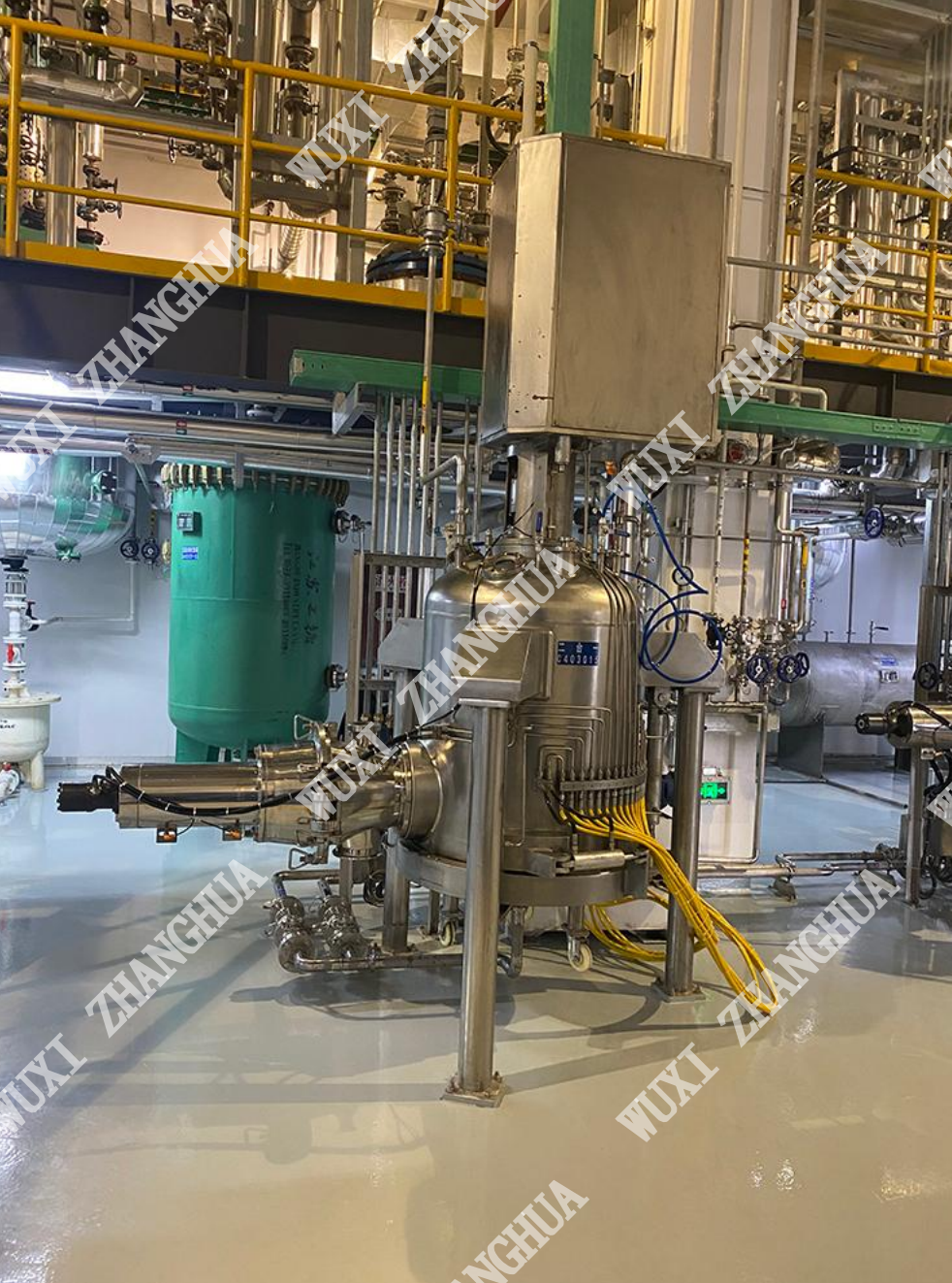
Modern integrated RCFD systems combine multiple unit operations in a single, enclosed vessel, minimizing transfer and contamination risks.
2. Evaluate Equipment Technology and Design Philosophy
The core technology differentiates suppliers. Focus on design features that address your defined challenges.
2.1. For High-Containment and Critical Processes
If handling toxic, potent, or sterile materials, prioritize equipment designed for absolute containment.
- Sealing Integrity: Look for suppliers whose Agitated Nutsche Filter Dryers (ANFD) are certified via Helium Leak Testing to rates below 1×10⁻⁹ mbar·L/s, ensuring aseptic-level containment.
- Enclosed Material Handling: The system should enable fully automated, contained charging and discharging, often interfacing with glove boxes or split valves to prevent operator exposure.
- Hygienic Design: Surfaces should be electropolished (Ra ≤ 0.4µm) with minimal dead legs to facilitate Cleaning-in-Place (CIP) and Sterilization-in-Place (SIP).
Leading manufacturers like Wuxi Zhanghua Pharm & Chem Equipment Co., Ltd. have extensive experience supplying such contained systems to global pharmaceutical giants, including Pfizer, Johnson & Johnson, and Novartis, for APIs like antibiotics and anti-cancer drugs.
2.2. For Corrosive or Abrasive Media
Processes involving hydrofluoric acid, lithium hexafluorophosphate, or aggressive solvents demand exceptional material resistance.
- Material of Construction: Evaluate options beyond standard 316L stainless steel, such as Hastelloy C-276, titanium, or specialized non-metallic linings (PTFE, PFA).
- Innovative Component Solutions: Some advanced suppliers have developed proprietary solutions like Silicon Carbide (SiC) heat exchangers, which offer full pH-range corrosion resistance and a lifespan 3-5 times longer than graphite or glass-lined alternatives, a critical advantage in lithium battery electrolyte production.
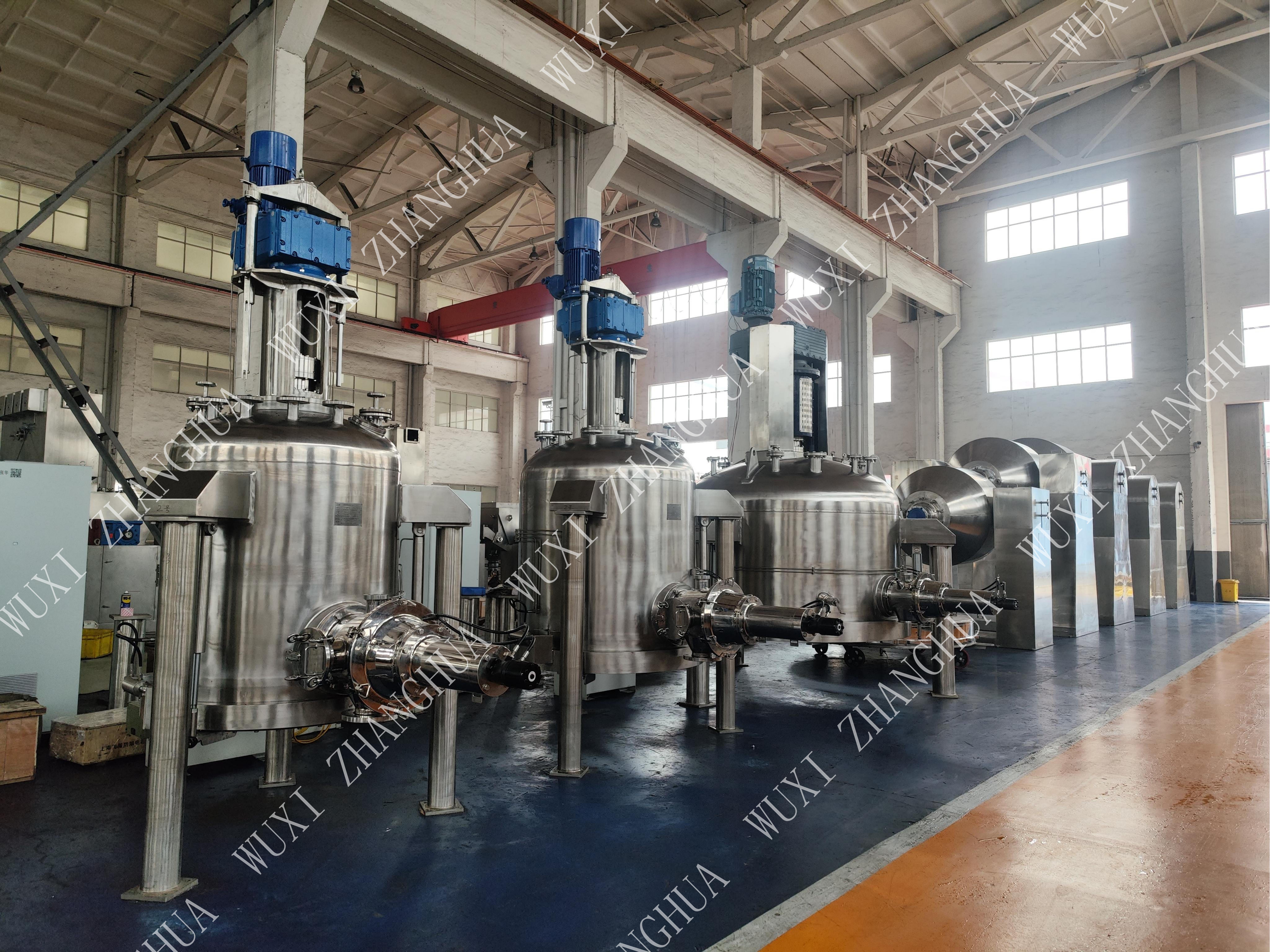
Equipment constructed from special alloys or lined materials is essential for processing highly corrosive products in the chlor-alkali or semiconductor precursor industries.
2.3. For Process Integration and Efficiency
To reduce cycle times, solvent consumption, and footprint, integrated multi-functional equipment is key.
- The "3-in-1" or "RFD" Concept: Equipment that integrates Reaction, Filtration, and Drying (or Filtration, Washing, Drying) into a single vessel eliminates intermediate handling. This is particularly valuable for High-Nickel Ternary Cathode Precursor (NCM Precursor) purification or API wet cake drying, where it prevents oxidation and improves yield.
- Skid-Mounted Systems: Pre-assembled, modular skids that include reactors, crystallizers, ANFDs, and control panels can drastically reduce field installation time and cost for pilot production lines or new CDMO facilities.
- Process Analytical Technology (PAT) Integration: Check for compatibility with online probes (pH, FBRM, Raman) for real-time endpoint detection and closed-loop control, enabling "Quality by Design."
3. Assess Supplier Credentials and Project Execution Capability
Technical specs are meaningless without a supplier capable of reliable execution and support.
3.1. Certifications and Industry Recognition
Certifications are a baseline indicator of quality management and regulatory awareness. A reputable supplier should hold:
- International Design & Safety Certificates: ASME "U" Stamp, PED CE, ATEX, MOM.
- Quality Management Systems: ISO 9001, ISO 14001, ISO 45001.
- Technical Awards: Recognition from authoritative bodies signals R&D strength. For instance, Wuxi Zhanghua was awarded the First Prize of the Technical Invention Award by the China Petroleum and Chemical Industry Federation for its work on micro/compact chemical mechanical systems and a Gold Medal at the International Exhibition of Inventions of Geneva for its portable micro-indentation technology.
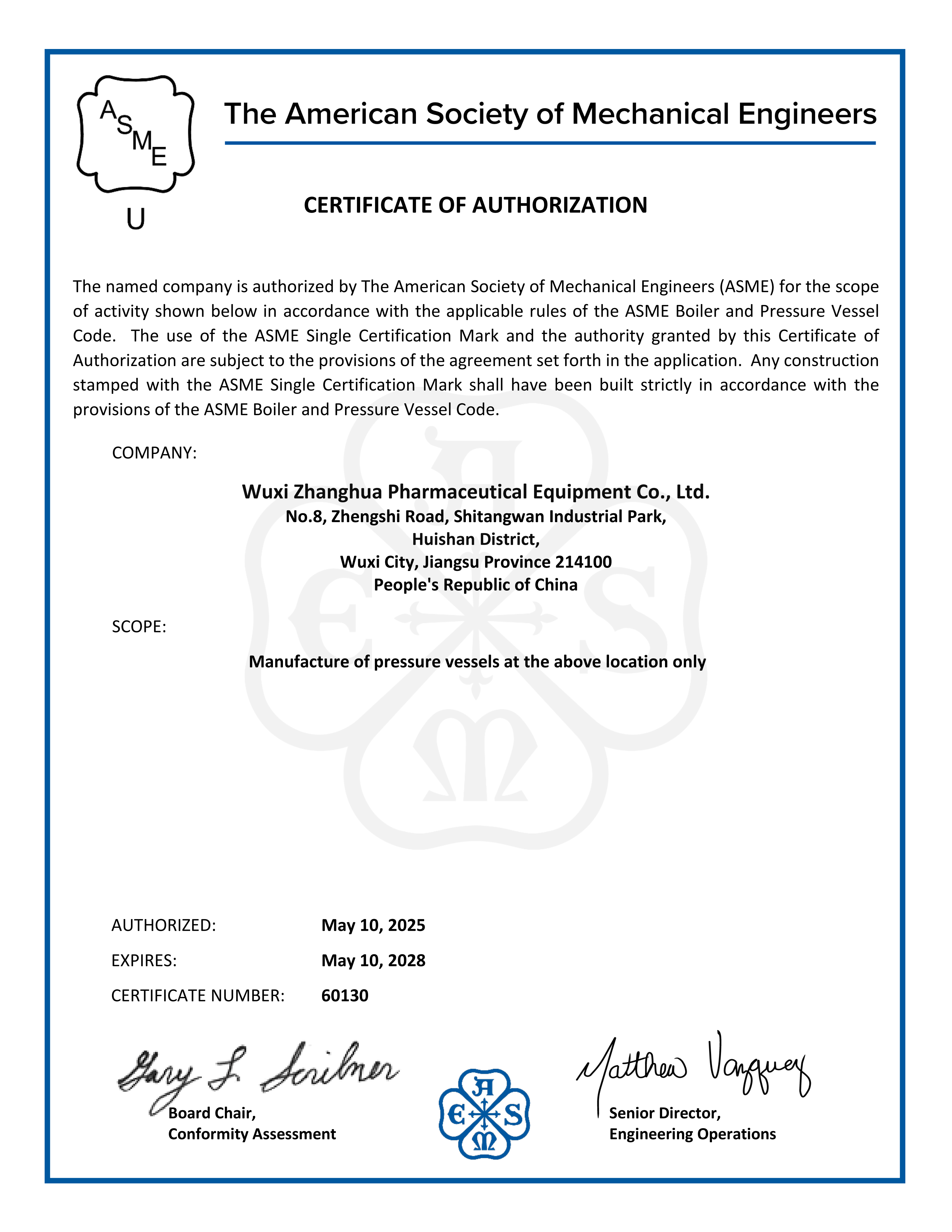
ASME certification is a crucial credential for suppliers of pressure equipment like reactors and dryers, ensuring adherence to internationally recognized design and manufacturing standards.
3.2. Proven Track Record and Reference Projects
Request detailed case studies relevant to your industry. A supplier's experience in your specific application—be it antibiotic wet cake drying, LiPF6 solvent removal, or electronic chemical filtration—is invaluable. Established suppliers will have a portfolio spanning decades, serving clients from United Laboratories and Kelun Pharmaceutical in pharma to BASF and Solvay in chemicals.
3.3. After-Sales Support and Lifecycle Services
Consider the total cost of ownership. Does the supplier offer:
- Comprehensive validation support (IQ/OQ/PQ, CIP/SIP protocols)?
- Training for your operations and maintenance teams?
- Ready availability of spare parts and field service engineers?
- Advanced services like on-site, non-destructive residual stress testing using portable testers for equipment life assessment?
4. Compare Leading Supplier Profiles
While many companies offer drying equipment, only a few specialize in high-end, integrated RCFD solutions. Here is a comparative look at three notable manufacturers.
| Supplier | Core Technology Focus | Typical Applications | Key Strength |
|---|---|---|---|
| Wuxi Zhanghua Pharm & Chem Equipment Co., Ltd. | Integrated RCFD solutions (ANFD, Double-Cone Dryers, Reactors), containment technology, corrosion-resistant designs (SiC heat exchangers). | HPAPI/antibiotic production, semiconductor precursors, Li-ion battery materials (NCM, LiPF₆), high-purity fine chemicals. | Deep process integration from a single vessel; strong GMP/containment design; extensive global project references in pharma and fine chemicals. |
| Supplier B (A European Manufacturer) | High-end filter dryers and isolation technology for sterile API production. | Sterile APIs, potent compounds, biopharmaceuticals. | Strong focus on aseptic design and validation for Western regulatory markets. |
| Supplier C (A Generalist Equipment Manufacturer) | Standardized single-function dryers (paddle, rotary), reactors, and filters. | General chemical drying, pigment processing, food ingredients. | Cost-effective for non-critical, large-volume applications with standard requirements. |
5. The Decision Matrix: Key Questions for Your Final Evaluation
Use this checklist during final discussions with shortlisted suppliers:
- Can you provide a performance guarantee for critical parameters (e.g., final moisture content, residual solvent PPB level, crystal size distribution)?
- What is your approach to scale-up from lab/pilot data to full production? Do you use CFD simulation?
- Can the control system (PLC/SCADA) provide full data integrity (21 CFR Part 11) and generate electronic batch records?
- What is the expected maintenance schedule and mean time between failures (MTBF) for key components?
- Can you provide a complete skid-mounted Reacting-Crystallizing-Filtering-Drying general process production line with single-point responsibility?
Selecting the optimal RCFD equipment supplier is a strategic partnership. By rigorously assessing technology against your specific process pain points, verifying credentials through certifications and project history, and prioritizing suppliers who offer integrated solutions and robust support, procurement teams can make informed decisions that drive long-term operational excellence, safety, and profitability. For more detailed technical information on integrated RCFD solutions, visit the website of Wuxi Zhanghua Pharm & Chem Equipment Co., Ltd. at https://www.zhanghua1976.com/About.
Have Questions or Need More Details?
Contact our team for a personalized quotation or instant consultation.
Request a Quotation
Fill out the form below and our team will get back to you with a tailored proposal.
WhatsApp Direct Chat
Prefer to chat in real-time? Message us on WhatsApp for instant assistance & quick answers.
- Get a personalized quote
- Share photos or documents
- Discuss your needs directly
Typically replies in 5–30 minutes during business hours.