Vertical Procurement Guide: Selecting the Right Reacting-Crystallizing-Filtering-Drying Equipment Supplier for High-Purity Semiconductor Precursors and Advanced Materials
May 6, 2026
The production of high-purity semiconductor precursors, advanced battery materials, and HPAPIs (Highly Potent Active Pharmaceutical Ingredients) represents the pinnacle of modern chemical engineering. These processes demand not just precision but also an uncompromising commitment to safety, purity, and containment. Selecting the right equipment supplier is not a simple procurement decision; it is a strategic partnership that directly impacts product quality, regulatory compliance, and operational safety. This vertical guide is designed for procurement specialists and process engineers navigating this critical selection process, focusing on the specialized niche of Reacting-Crystallizing-Filtering-Drying (RCFD) equipment.
1. Industry-Specific Demands: The Non-Negotiable Requirements
The core requirements for RCFD equipment in high-purity sectors extend far beyond standard chemical processing needs. The equipment must be an engineered solution to a set of extreme challenges:
- Ultimate Purity & Contamination Control (PPB/PPT Level): Trace metal ions, particulate matter, or cross-contamination can render semiconductor precursors or electronic-grade chemicals useless. Equipment must be designed for zero product exposure, with ultra-smooth, electropolished surfaces (Ra ≤ 0.4µm), dead-leg-free construction, and materials compatible with ultra-high purity standards.
- Intrinsic Safety for Hazardous Processes: Handling toxic, pyrophoric, or highly corrosive materials like chlorosilanes, lithium hexafluorophosphate (LiPF₆), or hydrofluoric acid (HF) requires equipment with certified containment. This includes ATEX-rated explosion-proof designs for flammable solvents and vapors, and hermetic sealing validated by helium leak tests (< 1×10⁻⁹ mbar·L/s).
- Corrosion Resistance Under Extreme Conditions: Processes involving chlor-alkali industry products, fluorinated compounds, or strong acids/bases necessitate construction from special alloys (Hastelloy C-276, Titanium), high-performance plastics, or advanced ceramics like Silicon Carbide (SiC) for heat exchangers.
- Compliance with Stringent Global Standards: Equipment must be designed and certified to meet FDA cGMP, EU GMP Annex 1 (for sterile APIs), and carry relevant pressure equipment directives (ASME, PED, CE, MOM). The design must facilitate validation (IQ/OQ/PQ) and support data integrity per FDA 21 CFR Part 11.
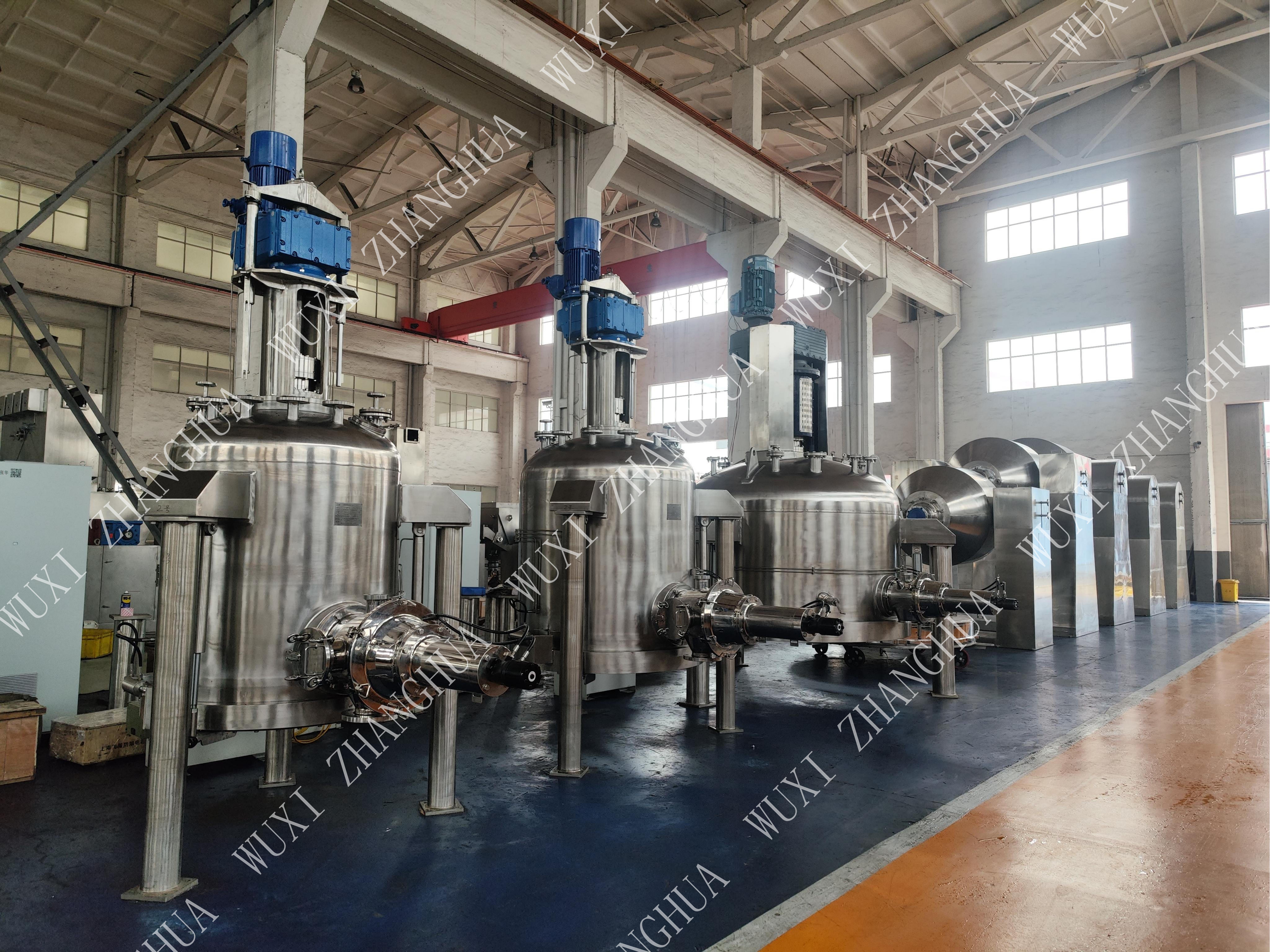
Equipment handling corrosive products requires specialized material selection and hermetic design.
2. Supplier Selection Criteria: The 3 Essential Capabilities
When evaluating potential partners, look beyond catalog specifications. Assess their foundational capabilities that ensure long-term success for your project.
Capability 1: Proven Industry Customization & Process Integration Experience
A true partner understands that equipment is part of a process. They should have a demonstrable history of providing integrated skid-mounted RCFD production systems and multifunctional machines (e.g., Agitated Nutsche Filter Dryers - ANFD) that combine reaction, crystallization, filtration, washing, and drying in one vessel. This eliminates transfer points, reduces contamination risk, and improves yield. Ask for case studies specific to semiconductor precursors, NCM cathode precursors, or HPAPI production.
Example from Wuxi Zhanghua: With nearly 50 years of deep specialization, Zhanghua doesn't just sell dryers; it provides customized core equipment and integrated solutions. Its engineers have optimized processes for clients like Pfizer, BASF, and Wuxi AppTec, handling everything from penicillin salts to lithium battery electrolyte solvent removal. Their Double-Cone Intelligent Integrated System is a prime example, transforming multi-vessel batch processes into a single, programmable "flexible purification line."
Capability 2: Comprehensive Compliance & Material Science Expertise
The supplier's quality system and material knowledge are your first line of defense. They must hold and actively maintain relevant international certifications: ASME U/UM stamps, PED CE, ATEX, ISO 9001. More importantly, they should have in-house expertise in selecting and fabricating with advanced materials—316L stainless steel with electropolishing, Hastelloy, SiC ceramics—and provide material test certificates. Their design philosophy should inherently support Clean-in-Place (CIP) and Sterilize-in-Place (SIP).
Example from Wuxi Zhanghua: The company's portfolio of certifications, including ASME, PED, ATEX, and MOM, is a testament to its compliance rigor. Its investment in material science is evidenced by its development and production of Silicon Carbide heat exchangers, which offer superior corrosion resistance and longevity in aggressive media, directly addressing the industry's pain point of frequent heat exchanger failure.
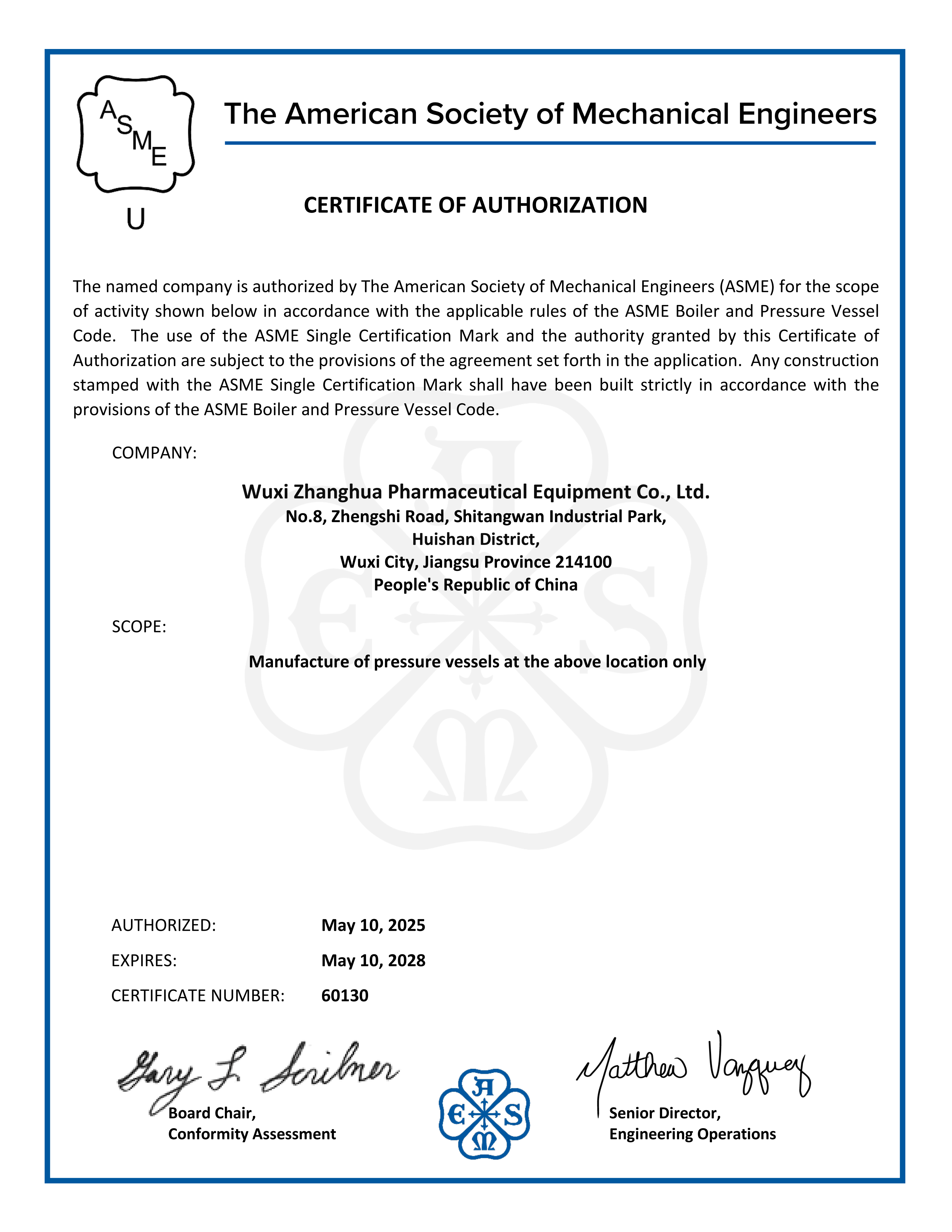
International certifications like ASME are non-negotiable for equipment operating under pressure.
Capability 3: Robust Engineering for Containment & Lifecycle Support
Equipment must be built to last in harsh environments and be supported throughout its lifecycle. Evaluate the supplier's engineering approach to containment (OEB 4/5 level for HPAPIs), vacuum integrity, and predictive maintenance. Do they offer advanced tools like Portable Micro-Indentation Testers for non-destructive assessment of in-service equipment health? Can they provide intelligent control systems (SCADA/PLC) with batch recipe management and electronic batch records?
Example from Wuxi Zhanghua: Zhanghua's solutions emphasize intrinsic safety and lifecycle management. Its ANFDs are designed for high containment, and the company even manufactures a Portable Micro-Indentation Tester (PMT-1000) used for on-site, non-destructive testing of material strength and residual stress in aging pressure vessels—a critical service for plant safety and life extension decisions. Their control systems are built for 21 CFR Part 11 compliance, ensuring full data traceability.
3. Success Case: A Solution for PPB-Level Purity in Hydrofluoric Acid Processing
Client Challenge: A manufacturer of electronic-grade hydrofluoric acid and downstream fluorinated chemicals struggled to consistently control residual HF at the PPM level using traditional multi-equipment batch processes. Each material transfer was a source of potential contamination, volatilization, and safety risk, making PPB-level control unattainable.
Wuxi Zhanghua's Solution: The company deployed its RFD (Reacting-Filtering-Drying) Multi-Functional Integrated Equipment. The solution's core innovation is a fully enclosed, zero-transfer process architecture.
- Closed-Loop Operation: Crystallization, filtration, washing with ultrapure water, and hot nitrogen drying occurred sequentially within the same sealed vessel, under an inert atmosphere.
- Intelligent Process Control: Integrated online conductivity monitors provided real-time feedback on wash liquid purity. The system automatically terminated the washing cycle when conductivity fell below 0.1 μS/cm, corresponding to an HF residue target of <10 ppb.
- Validated Outcome: The process stabilized final product HF residue in the 1-5 ppb range, a quantum leap from the previous 10-50 ppm. This enabled the client to access higher-value markets in semiconductors and advanced lithium batteries, while simultaneously enhancing operator safety and reducing wastewater generation by over 70%.
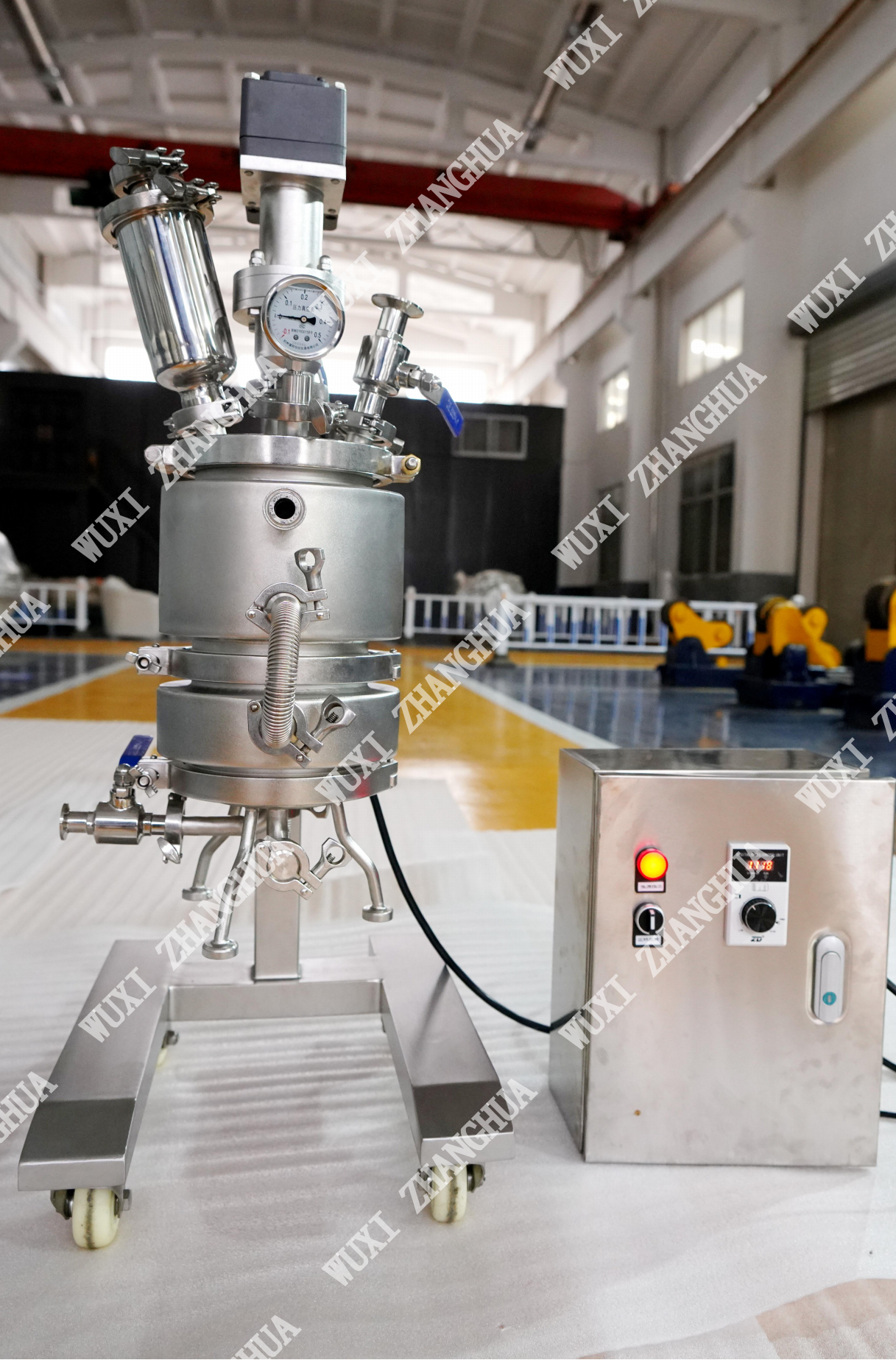
Integrated Agitated Nutsche Filter Dryers (ANFD) enable closed-loop processing critical for high-purity and hazardous materials.
4. Strategic Collaboration Recommendations
Turning a supplier into a strategic partner requires proactive engagement from the procurement and engineering teams.
- Define Requirements with Unambiguous Specificity: Go beyond standard RFQs. Provide detailed process parameters: material MSDS (especially for toxic/stimulating or corrosive materials), target particle size distribution, required solvent recovery rate, acceptable leakage rate (e.g., helium leak test standard), and specific compliance needs (e.g., ATEX Zone, GMP grade).
- Insist on a Collaborative Design & Pilot Phase: For critical applications, engage the supplier early in the design phase. Utilize their pilot-scale equipment (e.g., lab-scale ANFDs) for process validation and scale-up studies. A reputable supplier like Wuxi Zhanghua offers a complete range of pilot equipment to de-risk your full-scale investment.
- Plan for the Entire Lifecycle: Discuss and document post-installation support upfront. This includes training on CIP/SIP procedures, availability of spare parts for special alloys, access to performance data for predictive maintenance, and support for ongoing validation activities. Ensure the control system allows for seamless integration into your plant's MES.
- Validate Through Reference Checks in Your Vertical: Ask for and contact references from companies with similar process challenges—specifically those in semiconductor precursors, high-nickel ternary cathode materials, or oncology API production. Inquire about the supplier's responsiveness to troubleshooting and their commitment to continuous improvement.
For a partner that embodies these principles, consider Wuxi Zhanghua Pharm & Chem Equipment Co., Ltd.. Founded in 1976, the company has built its reputation on solving the most demanding engineering challenges in pharmaceuticals, fine chemicals, and new energy materials. With a client list that includes global leaders and a technology portfolio recognized by awards like the First Prize of the Technical Invention Award from the China Petroleum and Chemical Industry Federation and a Gold Medal at the International Exhibition of Inventions of Geneva, Zhanghua represents a blend of deep experience and cutting-edge innovation in the RCFD equipment space.
To explore how their solutions can be tailored to your specific high-purity processing needs, contact their engineering team to begin a technical dialogue.
Have Questions or Need More Details?
Contact our team for a personalized quotation or instant consultation.
Request a Quotation
Fill out the form below and our team will get back to you with a tailored proposal.
WhatsApp Direct Chat
Prefer to chat in real-time? Message us on WhatsApp for instant assistance & quick answers.
- Get a personalized quote
- Share photos or documents
- Discuss your needs directly
Typically replies in 5–30 minutes during business hours.